

The mouse and his child: what is IVG, and could two men ever have a baby together?


For most of us, making a baby follows a familiar biological formula: one egg, one sperm. But scientists are exploring whether that rule could one day change.
A growing area of fertility research called in vitro gametogenesis (IVG) is investigating whether eggs and sperm could be created in a laboratory using ordinary cells, such as those taken from skin or blood. It’s one of the most talked-about but taboo developments in reproductive medicine – and it’s also responsible for plenty of headlines, misconceptions and genuinely fascinating questions.
So, is IVG possible? Could lab-grown sperm and eggs help treat male and female factor infertility? Can two men have a baby with their DNA? Or two women? There are no silly questions here.
Let’s separate the science from the speculation.
What are the basics?
In vitro gametogenesis (IVG) is a scientific process that aims to create eggs and sperm – known collectively as gametes – in a laboratory rather than relying on those produced naturally by the ovaries or testes.
Researchers begin by taking an adult cell, often a skin or blood cell, and reprogramming it into an induced pluripotent stem cell (iPSC). These stem cells can then, in theory, be guided through the complex stages of development that eventually produce mature eggs or sperm.
In simple terms, IVG is an attempt to recreate one of the body’s most intricate biological processes outside the body.
Although scientists have made remarkable progress in animals, producing human eggs and sperm that are safe, healthy and suitable for fertility treatment remains an enormous scientific challenge.
Is IVG possible?
Yes, but with an important caveat.
IVG is scientifically possible in principle – researchers have already demonstrated major milestones in animal studies. Scientists have successfully created eggs from mouse stem cells that have gone on to produce healthy offspring, proving that the concept itself can work.
Human biology, however, is considerably more complicated.
Researchers are still working to ensure laboratory-created human reproductive cells develop correctly, carry the right genetic information and undergo the essential biological changes needed to support healthy embryo development.
So while IVG progress is advancing steadily in 2026, it has not yet reached the stage where fertility clinics can offer it as a treatment.
Can sperm be created in a lab?
This is one of the biggest areas of active research.
Scientists have succeeded in creating increasingly advanced sperm precursor cells and have recreated several critical stages of sperm development. More recently, researchers have reported important breakthroughs in understanding the biological “resetting” process that sperm undergo before becoming capable of fertilization.
Research highlighted this year has renewed optimism that lab-grown sperm could one day provide new options for men with ‘severe infertility’ – particularly those who produce no viable sperm at all.
However, no fertility clinic currently offers fully functional lab-grown sperm for human treatment.
There’s still a significant amount of work to do before researchers can demonstrate that laboratory-created sperm are genetically stable, safe and capable of producing healthy pregnancies.
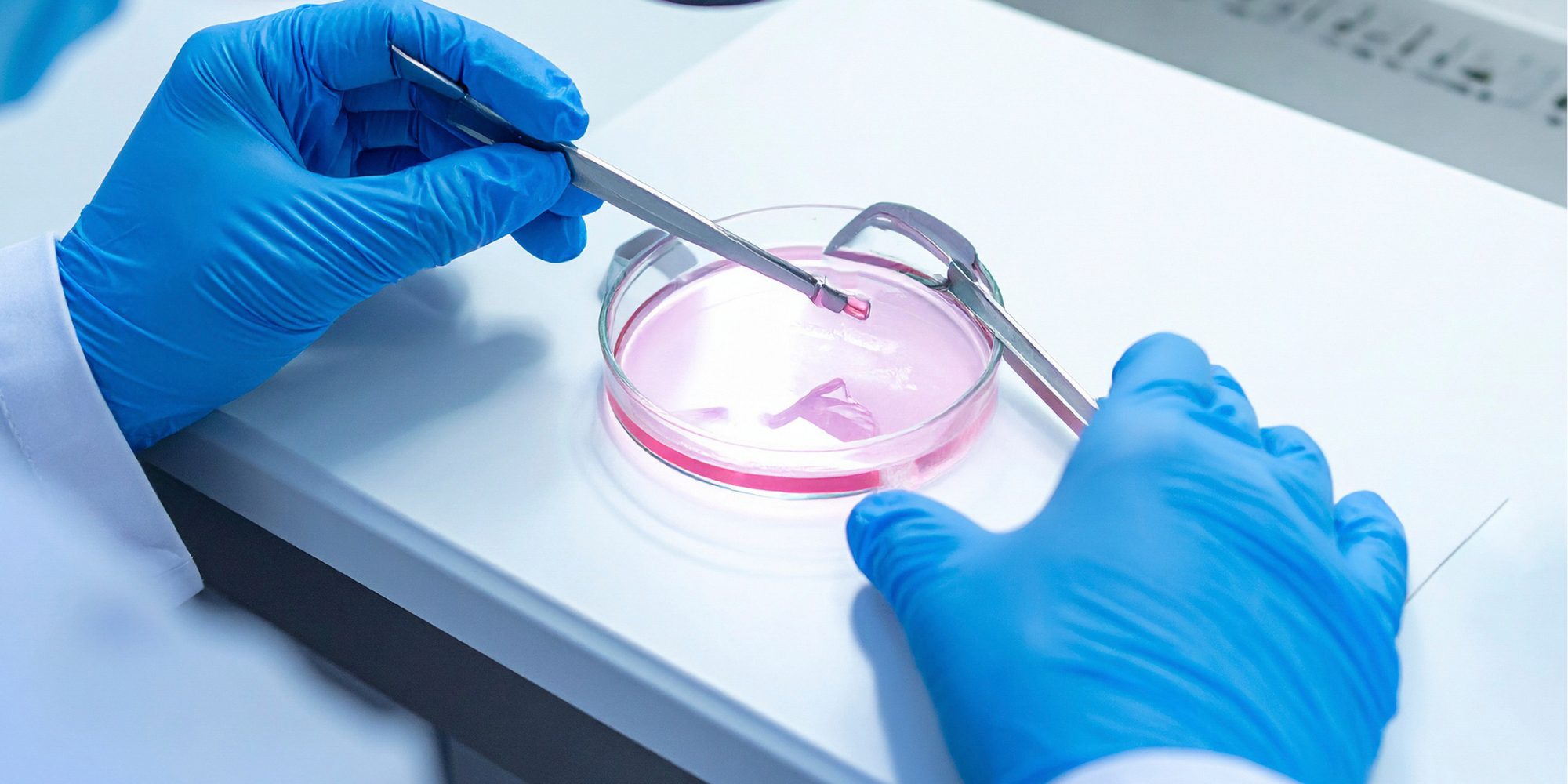
What about lab-grown eggs?
Research into lab-grown eggs and sperm is progressing simultaneously, although creating human eggs presents its own unique challenges.
Human eggs are among the largest and most complex cells in the body. They spend decades developing naturally before ovulation and undergo intricate genetic and epigenetic changes throughout that time.
Scientists have successfully generated egg-like cells in laboratory settings, but they have not yet created human eggs that are approved for use in fertility treatment.
For now, donor eggs, egg freezing and IVF remain the established clinical options for people unable to use their own eggs.
When will IVG be available?
This is probably the biggest question – and the hardest to answer.
Some experts believe the first carefully regulated human clinical trials could begin within the next decade if research continues progressing well. Others think widespread clinical use may still be many years, or even decades, away.
The science is only one part of the equation. Before IVG could become available, researchers would also need to satisfy regulators that the technology is safe for patients and, crucially, for any children born using it.
That means long-term safety studies, ethical oversight and regulatory approval would all need to happen before IVG became part of routine fertility care.
Has a human egg ever been fertilized without sperm?
Not in the way most people imagine.
Scientists can ‘activate’ human eggs in the laboratory without sperm using a research technique called parthenogenetic activation, which stimulates an unfertilized egg to begin dividing.
However, these embryos are not viable pregnancies. Human development requires genetic material from both egg and sperm because each contributes different patterns of genomic imprinting – chemical instructions that switch certain genes on and off during development.
So while an egg can be prompted to begin early cell division without sperm in research settings, a healthy human baby cannot currently be created this way.
Can two men have a baby with their DNA?
Right now, no.
In theory, IVG raises the possibility that one day scientists might be able to take a skin cell from one person and convert it into an egg, while another person’s cells provide sperm. If that became possible safely, it could allow two men to have a child genetically related to both of them.
But that remains firmly theoretical.
Scientists have achieved some early proof-of-concept experiments in mice involving same-sex reproduction, but translating those findings to humans would require overcoming enormous biological, technical and ethical hurdles.
There are currently no human pregnancies or births using this approach, and experts caution that it remains speculative rather than an emerging clinical reality.
So why the excitement – aside from the science?
Despite the uncertainty, IVG has enormous potential.
If researchers can eventually produce safe, functional eggs and sperm, the technology could transform fertility treatment for people who currently have very limited options, including:
- men with no sperm production
- women with premature ovarian insufficiency
- cancer survivors whose fertility has been affected by treatment
- some people with genetic or developmental conditions affecting fertility
It could also deepen our understanding of how eggs and sperm develop, helping scientists improve existing fertility treatments along the way.
Read next: What is the ROPA method? Reciprocal IVF cost & treatment 101