

Starting progesterone in oil (PIO) shots – (Almost) everything to know

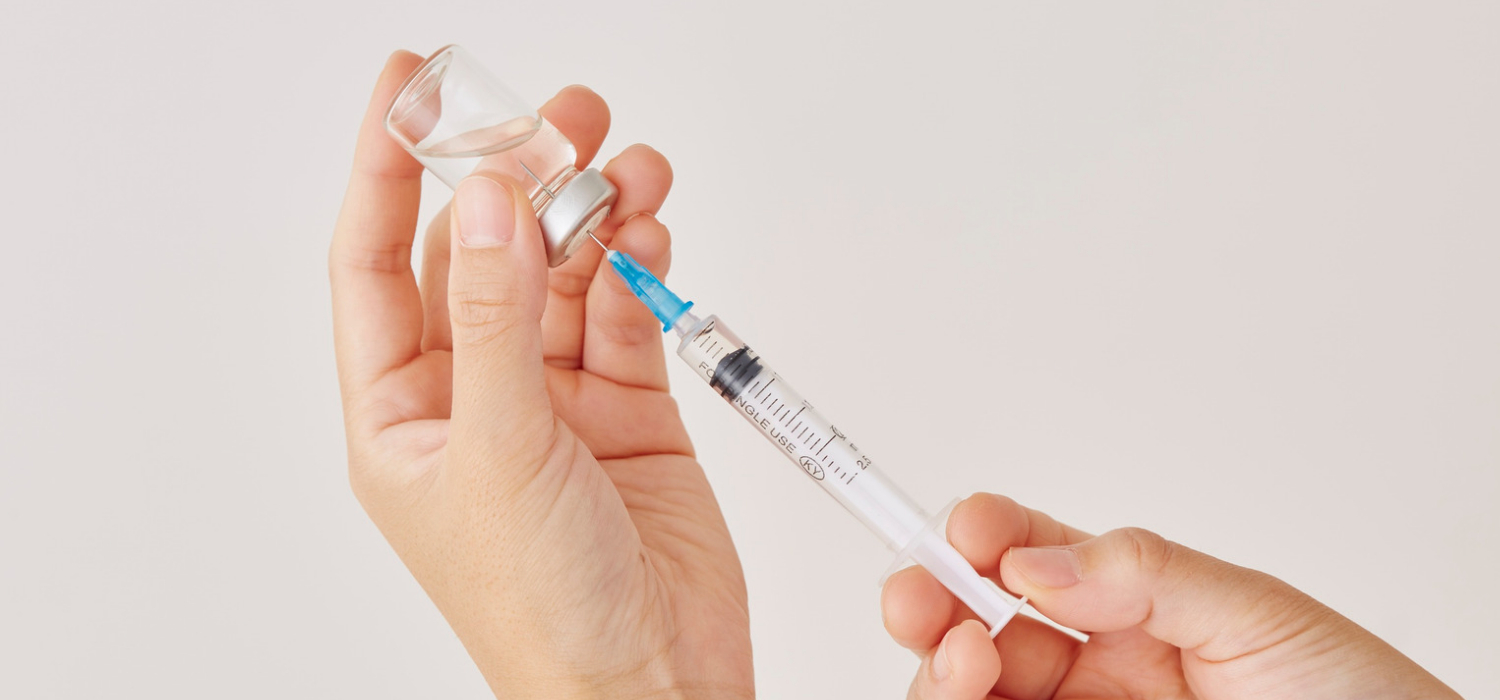
PIO injections, at a glance
PIO stands for progesterone in oil, an intramuscular injection used to provide progesterone during some IVF and IUI treatment cycles. It helps prepare and support the uterine lining for embryo implantation and early pregnancy, with the timing and dose determined by your fertility clinic.
PIO injections are usually given into a large muscle, commonly the upper outer buttock or hip, depending on your clinic's instructions.
How long you take PIO varies – some patients continue progesterone through the first trimester if pregnancy occurs, so always follow your clinic's individual schedule.
Progesterone in oil (PIO) shots can feel like the point in fertility treatment when things suddenly get a whole lot more… involved. After all, they call for an injection into the muscle, in a rather tricky place to reach. Lovely!
If you’re about to hit go on IVF, IUI or egg freezing, or you’re currently in the thick of it, you’re certainly not the only one with specific questions.
Keen to know where to inject progesterone in oil, or simply want to make the process feel less daunting? The Fertility Concierge is one to bookmark. They send registered nurses to your home to administer your fertility injections according to your clinic’s instructions and schedule. It’s one less thing to manage when you’re already juggling medications, appointments and everything else that comes with treatment.
We spoke to Dr. Brian Kaplan, MD, Chief Medical Advisor to The Fertility Concierge, and Olivia Rara, MSN, RN, fertility nurse and Clinic Relationship Lead. They’ve smashed some of your top FAQs about PIO – here’s their take on how to make those daily injections a little easier.
Over to the experts.
What is a PIO injection?
PIO stands for progesterone in oil. It is progesterone delivered as an intramuscular injection, meaning it is injected into a muscle rather than underneath the skin.
Progesterone is an important reproductive hormone. After ovulation in a natural cycle, the corpus luteum produces progesterone, which helps prepare the uterine lining for implantation and supports early pregnancy.
During fertility treatment, the body’s usual hormone patterns can be affected by medications and the type of cycle being used, so supplemental progesterone may be prescribed as luteal-phase support.
“The need for supplemental progesterone, as well as the dose, timing and duration, varies based on the clinic’s protocol and the patient’s individual treatment plan,” says Dr. Kaplan.
Why does progesterone need to be in oil?
As Dr. Kaplan explains, there are two main reasons.
- First, progesterone doesn’t dissolve well in water but does dissolve in oil, allowing it to be prepared as a stable injectable solution.
- Second, the oil-based formulation allows the progesterone to be absorbed from the muscle over time.
What does progesterone in oil do to your body?
Put simply, progesterone helps prepare the uterine lining for an embryo and supports the hormonal environment needed in early pregnancy.
Earlier in the cycle, estrogen helps build the endometrium, or uterine lining. Progesterone then helps mature that lining into a receptive environment for implantation.
Progesterone in oil for IVF
PIO is one form of progesterone support that may be used during IVF.
With a fresh embryo transfer, PIO may begin around egg retrieval or shortly afterward, depending on the clinic’s protocol.
With a medicated frozen embryo transfer (FET), estrogen is typically used first to prepare the lining. Once it is ready, progesterone is introduced before embryo transfer.
For a day-five blastocyst, around five days of progesterone before transfer is a common approach, although protocols can vary, and that’s totally normal.
Progesterone in oil for IUI
The role of progesterone can be different during IUI.
In some IUI cycles, the body ovulates and produces progesterone naturally. In others, a clinic may prescribe supplemental progesterone as luteal-phase support, depending on the medications being used and the individual treatment plan.
“There isn’t one progesterone protocol that applies to every IVF or IUI cycle,” says Dr. Kaplan. Your clinic should tell you exactly when to start, how much to take, and when to stop.
How long do you take PIO shots for IVF?
This is one of the biggest questions you might have, but (and we’re sorry!) there isn’t one universal PIO timeline you can count on prepping for.
Here’s the rough guide:
- Fresh embryo transfer – PIO may begin around egg retrieval or shortly afterward.
- Medicated FET – progesterone usually starts once the lining is ready and before embryo transfer.
- After a positive pregnancy test – progesterone may continue into early pregnancy.
- Stopping progesterone – many clinics stop supplementation around the end of the first trimester, but timing varies.
If you’re wondering “how long do I take PIO injections for IVF?”, the most accurate answer is: for as long as your fertility clinic has prescribed them for your individual cycle.
Even after a positive pregnancy test or if you’re experiencing side effects, don’t change or discontinue your PIO injections without first speaking with your fertility care team.

Where do you inject progesterone in oil?
Where to inject progesterone in oil – it’s a huge practical question.
PIO is an intramuscular injection, so it needs to be administered into an appropriate large muscle. Olivia explains that common PIO injection locations include the upper outer buttock or hip.
The upper outer buttock
The upper outer buttock is a commonly taught PIO injection site. Correct positioning helps keep the injection in the appropriate muscle and away from the sciatic nerve.
The downside? It’s not exactly easy to see or reach yourself.
The hip
Some clinics recommend the hip as an alternative PIO injection site. It can be easier for some patients to access, although the correct location and technique still need to be demonstrated by your care team.
Don’t guess your injection location from an online diagram. Always follow the technique and injection site recommended by your fertility clinic.
If you’re unsure where to inject progesterone in oil, ask your clinic to demonstrate the correct location before attempting the injection yourself.
PIO injection side effects: what should we know?
Repeated PIO injections can cause some local discomfort. Common reactions include:
- Soreness or tenderness
- Small lumps or areas of firmness
- Mild redness or itching
- Bruising
These reactions can become more noticeable when injections are repeated over several days or weeks.
Contact your fertility clinic if you experience symptoms that are significant, worsening or concerning, including any spreading redness, significant warmth or swelling, pus or drainage, fever, increasing pain, a growing or increasingly painful lump, numbness, tingling or shooting pain down the leg, or a rash beyond the injection site.
“What’s expected can vary, and general information can’t account for an individual patient’s circumstances. When in doubt, the patient’s own fertility care team is the appropriate source of medical guidance,” Olivia explains.
Making PIO injections easier
“PIO can feel quite different from the injections patients may have become accustomed to during their stimulation cycle,” says Olivia.
It’s an intramuscular injection, and the oil-based medication is relatively thick, so a larger needle may be used than with some subcutaneous fertility medications.
Then there’s the location. Trying to reach your own upper outer buttock or hip while correctly positioning an intramuscular injection can be a little awkward.
Here’s what Olivia recommends to make these injections more manageable:
- Warm the oil – Some clinics recommend gently warming the medication in your hands so it flows more easily. Follow your clinic’s instructions for preparing your medication.
- Warm the injection area – A warm compress or heating pad may be recommended to help relax the muscle. Avoid excessive heat.
- Relax the muscle – Find a comfortable position and avoid tensing the area you’re injecting.
- Alternate sides – If recommended by your clinic, alternating sides gives each area time to recover.
- Avoid particularly sore areas – If somewhere is bruised, lumpy, or very tender, ask your clinic whether you should use an alternative site.
If you’re unsure about your technique or injection location, ask your fertility team for another demonstration rather than trying to work it out yourself.

3 reminders to see you through
Olivia’s advice is to make PIO as predictable as possible.
- Make it a routine – Choose a consistent time each day according to your clinic’s instructions. Keep your supplies together and build the injection into an existing routine.
- Keep track – Set a daily reminder and record the date, time, and injection side. This can help you follow your clinic’s instructions and give your care team useful information if you’re experiencing soreness or other reactions.
- Ask for help – You don’t have to be the person holding the needle. If reaching the injection site is difficult, or you’re simply feeling overwhelmed by another daily treatment task, having someone else administer your PIO injections can make a real difference.
Moving through IVF or any kind of fertility treatment is no small thing. You’ve got this, and we’ve got you.
The Fertility Concierge can send a TFC-Certified™ registered nurse to your home to administer fertility injections according to your clinic’s instructions and schedule.
That means you can have professional nursing support with the practical side of your treatment, in your own home and around your routine. Find out how at-home fertility injection support can work for you, and book here.
Find out how at-home fertility injection support can work for you and book here.
Your fertility clinic will still be responsible for your medical treatment plan, including your medication, dose, timing, and injection instructions – The Fertility Concierge helps you carry out that plan with professional, practical support. And that counts for a whole lot.
Want to hear more from The Fertility Concierge team? Bookmark their library of supportive resources:
PIO injections – quickfire FAQs
Medically reviewed by Dr. Brian Kaplan, MD, Chief Medical Advisor to The Fertility Concierge, with expert nursing guidance from Olivia Rara, MSN, RN, fertility nurse and Clinic Relationship Lead.
Q: How long do you do progesterone shots during IVF?
A: How long you take progesterone injections during IVF depends on your treatment cycle and clinic protocol. PIO may start around egg retrieval for a fresh transfer or before embryo transfer in a medicated FET. When pregnancy occurs, progesterone may continue into the first trimester, depending on your clinic’s protocol and individual treatment plan.
Q: What does progesterone in oil do to your body?
A: Progesterone in oil provides progesterone, a hormone that helps prepare the uterine lining for embryo implantation and supports early pregnancy. During fertility treatment, supplementation can provide luteal-phase support when the body’s natural progesterone production may not provide the support required by the treatment protocol.
Q: Why does progesterone need to be in oil?
A: Progesterone does not dissolve well in water, so an oil-based formulation allows it to be prepared as an injectable solution. PIO is designed for intramuscular administration, with the oil-based formulation allowing progesterone to be absorbed from the muscle over time.
Q: Where is the progesterone in oil injection site?
A: Progesterone in oil is given as an intramuscular injection, commonly into the upper outer buttock or hip, depending on your clinic’s instructions. The exact PIO injection location matters, so ask your fertility team to demonstrate the correct injection site and technique rather than relying on a general online diagram.