
Understanding your ovarian reserve (and the egg retrieval process) – a fertility doctor’s Q&A

Here at The Ribbon Box, one of the biggest concerns we hear from the TTC (trying to conceive) community is understanding ovarian reserve health and knowing what to expect during the egg retrieval process.
So today, we’re teaming up with leading US fertility clinic ORM Fertility to find out more.
Board-certified specialist with ORM Fertility Dr. Jamie Massie explains how to understand your ovarian reserve and hormone level testing, shares tips for supporting your reproductive health holistically, and talks you through what to expect during egg retrieval and ultrasound.
Over to Dr. Jamie Massie.
Your fertility potential
Uncertainty is all around us. We’ve developed a new normal where we must anticipate that things might not turn out the way we expected. This state of uncertainty is uncomfortable, and when it comes to specialised fertility treatment, not being able to plan or foresee the future can feel unbearable.
As a reproductive endocrinologist (fertility specialist), it’s crucial to me that my patients feel as prepared as possible before embarking on their fertility journey.
When you begin trying to conceive, it’s completely understandable to have lots of questions and feelings of anxiety. What are my treatment options? Do I really have to give myself a shot, more than once? How will this affect my body?
From the get-go, it’s not only important to understand what your fertility treatment process could look like, but also to understand your fertility potential. Doing so can help ease anxieties, set realistic expectations about your possible outcomes and give you a clearer understanding of what we mean when we talk about ovarian reserve.
Let’s walk through what we look for when assessing ovarian reserve and ovarian health at ORM Fertility, as well as what you can expect during the egg retrieval process once you have a better understanding of your fertility health.

What is ovarian health?
To get a better understanding of your fertility potential, we first look at your ovarian health. This is a broad term that refers, in part, to the number and quality of eggs within your ovaries. The more specific term used to describe the number of eggs remaining is ovarian reserve.
Your ovarian reserve is influenced not only by age, but also by your individual genetic timeline from puberty through to menopause.
Some women maintain a healthy ovarian reserve well into their early 40s, while others experience a significant decline in egg quantity and quality by their early 20s. Every woman is different, and understanding your ovarian reserve through testing can help you determine where you fall on this spectrum.
There isn’t one single test that can accurately measure your ovarian reserve, so two complementary assessments are typically used to build a clearer picture: hormone level testing and an ultrasound examination.
Hormone level testing
The first assessment is a blood test that measures two key hormones: Anti-Müllerian Hormone (AMH) and Follicle Stimulating Hormone (FSH).
AMH is produced by the cells surrounding immature eggs. Because this hormone is made by the cells supporting developing eggs, higher AMH levels are generally associated with a healthier ovarian reserve. One advantage of AMH testing is that it can be carried out at any point during your menstrual cycle, even if you are using hormonal birth control.
FSH works a little differently. This hormone is released by the brain to stimulate and support egg development.
Healthy ovaries typically require only a small amount of FSH to mature eggs. However, when egg numbers are lower, the ovaries need much more stimulation to encourage egg development. As a result, higher FSH levels can be a sign of a lower ovarian reserve.
Unlike AMH, FSH testing is more time-sensitive and should be carried out between the second and fourth days of your menstrual cycle to provide the most accurate assessment.
Ovarian reserve ultrasound
The second test used to assess ovarian reserve is an Antral Follicle Count (AFC).
An antral follicle is a small, fluid-filled sac that contains an immature egg. To measure your AFC, your physician performs a transvaginal ultrasound, which involves gently placing an ultrasound probe into the vagina. This allows them to count the number of visible follicles and assess your ovarian reserve.
For most women, a transvaginal ultrasound isn’t painful and takes around five minutes to complete.
To help you picture what a healthy ovary looks like on the scan, imagine a chocolate chip cookie: round, with lots of little dark circles scattered throughout. Those “chocolate chips” are the antral follicles that your physician is counting.

Decision making
Once you have a clearer understanding of your ovarian reserve and overall ovarian health, you’re in a much better position to make informed decisions about your reproductive future.
If you’re hoping to grow your family in the near term, in vitro fertilisation (IVF) can increase your chances of pregnancy, even if you have a lower ovarian reserve.
If you’re not ready to start a family, egg freezing offers an opportunity to preserve your eggs, so you have more options when circumstances shift.
Whichever path you choose, egg retrieval may be a key milestone to prepare for. The good news is that it’s a routine procedure and, for most patients, much easier than they initially expect.
That said, I understand that giving yourself injections at home and not knowing exactly how your body will respond can feel daunting. So, let’s walk through the process.
The egg retrieval process
IVF injections and the trigger shot
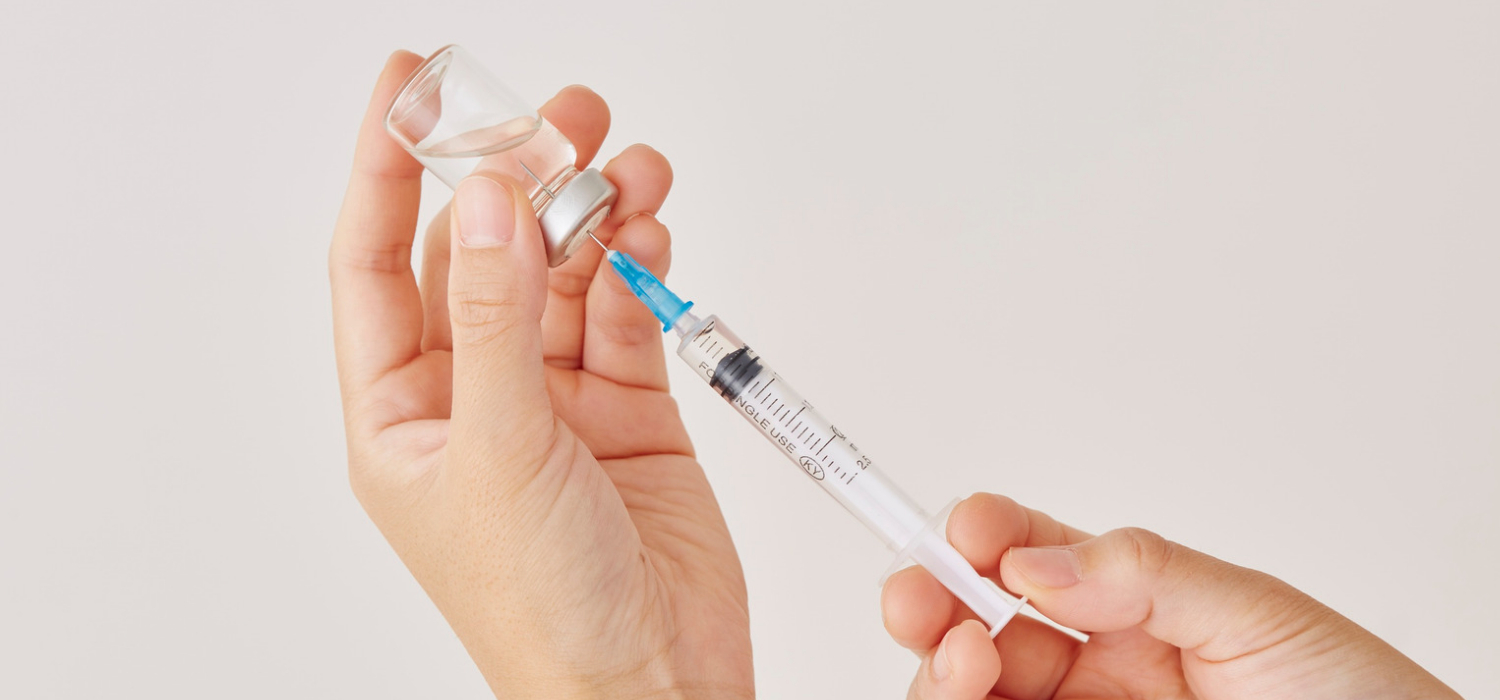
Whether you’re pursuing egg freezing or IVF, both treatment pathways involve injectable forms of the hormones FSH (Follicle Stimulating Hormone) and LH (Luteinising Hormone). These medications stimulate your ovaries to develop multiple eggs during a single treatment cycle.
The injections are given using very small needles into the skin of your abdomen. I know that probably sounds daunting, but after their first injection, many of my patients tell me it wasn’t nearly as bad as they’d feared. Every shot is different though, and some people will experience discomfort – either way, it should all be quick and gentle.
The injections are typically taken for around 8-14 days. During this time, your fertility clinic will closely monitor how your ovaries are responding with ultrasound scans and blood tests every 2-4 days.
If you’re still feeling nervous about giving yourself injections at home, you’re certainly not alone. Here are a few tips that may help make the process feel more manageable.
IVF injection tips
Be your own advocate. If you’re anxious about injections or needles, tell your fertility team. Many clinics can provide one-to-one teaching and guidance to help you feel confident before you start.
Find the technique that works for you. There isn’t one “right” way to give yourself IVF injections. You may find it easier sitting down, standing up or lying down. Some people feel more comfortable asking a partner, friend or family member to help.
Prepare in advance. Give yourself 15-30 minutes before your injection. Make sure you have everything you need from the pharmacy and organize a clean, comfortable space. Feeling prepared can help you feel calmer and more in control.
Breathe. Your breath is one of the most powerful tools for easing anxiety. Before your injection, spend 30 seconds to one minute taking slow, deep breaths through your nose. Deep breathing can help lower blood pressure, relax your nervous system and create a greater sense of calm before you begin.

IVF trigger shot
Once your ovaries are ready, you’ll receive an IVF trigger injection, which is used to precisely time the final maturation and release of the eggs. This prepares your ovaries for the egg retrieval procedure, which typically takes place 34-36 hours after the trigger shot.
At ORM Fertility, the trigger medication is administered in the same way as your previous injections, so there isn’t anything new or different to worry about. However, the type of trigger medication and how it is given may vary between fertility clinics.
Egg retrieval
To collect the eggs your body has been working so hard to grow, you’ll undergo a transvaginal oocyte retrieval procedure.
You’ll receive sedation through an IV line, so you won’t feel the procedure itself. Egg retrieval is a short, same-day procedure in which a fine needle is passed through the vaginal wall and into the ovaries to collect the fluid that contains the eggs.
Your fertility specialist then passes the collected fluid to an embryologist, who identifies and retrieves the mature eggs in preparation for fertilization.
After the egg retrieval procedure
Following your egg retrieval, you’ll want to take it easy for a day or two. Many women experience abdominal bloating and mild cramping for a few days after the procedure, but these symptoms usually improve with time.
At this stage, your next steps will depend on your treatment plan.
IVF – If you’re ready to grow your family, your eggs can be fertilized and cultured until they reach the blastocyst stage. The resulting embryos may then be transferred to the uterus in a fresh embryo transfer or frozen for future use.
Egg freezing – Freezing your eggs without fertilizing them is an option if you’re not ready to have children yet or are in the process of finding a sperm donor. Frozen eggs can be stored for many years, giving you the opportunity to build your family when the time is right. When you’re ready, the eggs can be thawed and fertilized using sperm from a partner or donor.
One of the remarkable things about both options is that frozen eggs and embryos don’t continue to age while in storage. This means that the chance of achieving a pregnancy using your frozen eggs or embryos is based on the age at which they were frozen, rather than how much time has passed.
For women who are later in their reproductive years, or those who expect to delay building their family, these treatment options may provide the opportunity to have a biological child using their own eggs when that might not otherwise be possible.
We know this process can feel overwhelming, but remember that you don’t have to go through it alone. You have the support of The Ribbon Box community, your fertility team and those around you. Take time to educate yourself, ask plenty of questions and choose the path that feels right for you.
Whether you’re about to undergo ovarian reserve testing or are simply considering it for the future, there are steps you can take to help support your fertility potential. Here are a few tips from our team at ORM Fertility to help you get started.

How to prepare for fertility treatment
There are several positive steps you can take to support your reproductive health and prepare your body for fertility treatment:
Don’t smoke. Smoking has a significant negative impact on ovarian health and can reduce ovarian reserve prematurely.
Prioritize sleep. Aim for at least six hours of sleep each night, with around eight hours being ideal. If you can, swap the late-night scroll binge for an earlier bedtime.
Drink alcohol in moderation. There’s no need to give up the occasional glass of wine, but regularly drinking more than four alcoholic drinks a week may have a negative impact on your reproductive health.
Eat a balanced diet. While there isn’t a single “fertility diet”, following a Mediterranean-style eating pattern has been associated with improved fertility and pregnancy outcomes in some studies.
Aim for a healthy weight. Having a body mass index (BMI) below 18 or above 25 has been associated with poorer outcomes for women undergoing fertility treatment.
Stay on top of your health. Don’t put off routine healthcare. Get you PAP smear, have your blood pressure checked, and stay on top of any other preventative care that can help support a healthy pregnancy when you conceive.
We hope this guide has given you a better understanding of ovarian health, ovarian reserve and why ovarian reserve testing can be such a valuable part of planning your fertility journey. Our aim is to empower you with reliable, evidence-based information so you can feel informed and prepared for fertility treatment and IVF.
If you’re struggling to conceive and would like specialist support, don’t hesitate to reach out to the team at ORM Fertility. They’ll be happy to discuss your options and help you take the next step on your fertility journey.