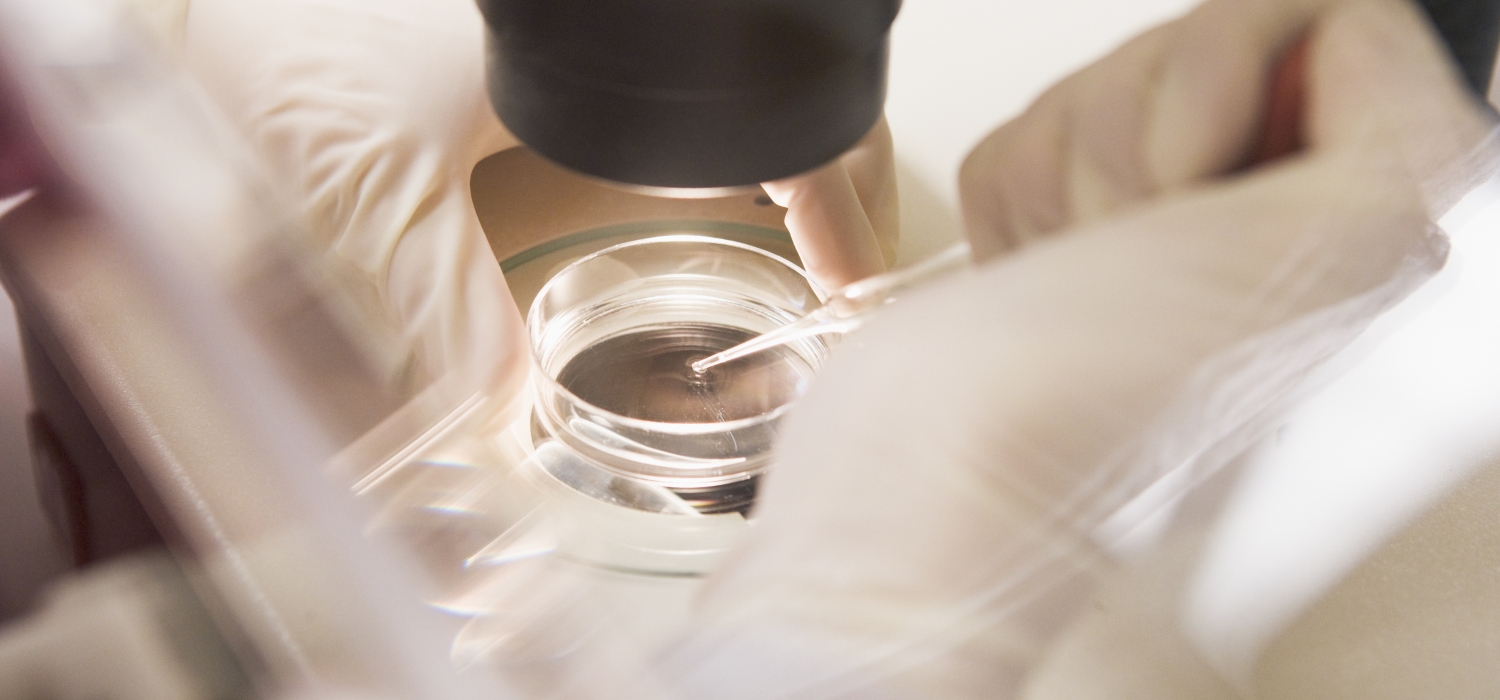

Considering IVF? Got questions about PGT-A testing? Get answers from fertility experts
Stepping into the world of IVF can feel overwhelming enough, but when someone mentions PGT-A testing, you might be left wondering how to navigate.
If you’re unsure about what it is, whether you need it, or how it could shape your treatment plan, you’re absolutely not the only one.
Does PGT-A increase success of IVF? Plus other key questions, answered
TRB Founder Eloise sat down with Miss Shirin Khanjani, Consultant Gynaecologist and accredited subspecialist in reproductive medicine, and Mr Dimitrios Mavrelos, Consultant in Obstetrics, Gynaecology and Reproductive Medicine at London-based Fitzrovia Fertility, for a genuinely illuminating chat breaking down PGT-A in a way that actually makes sense.
Watch as we get into:
- What PGT-A testing is – A clear explanation of pre-implantation genetic testing for aneuploidy and how it fits into a typical IVF cycle.
- When PGT-A is (and isn’t) recommended – Who might benefit most, which situations call for deeper genetic insight, and why it’s not a one-size-fits-all tool.
- How the testing works – From embryo biopsy to chromosome analysis, a step-by-step on what’s really happening behind the lab doors.
- How to understand your results – What “euploid,” “aneuploid,” and “mosaic” really mean, and why interpretation is more nuanced than it seems.
- Why even a “normal” embryo doesn’t always implant – One of the most common (and confusing) questions, explained with science and empathy.
- The HFEA red rating — decoded – What the traffic-light system means and how to use that information when making decisions about your care.
- How to decide if PGT-A is right for you – Key considerations to explore with your fertility specialist, based on your personal history, goals, and circumstances.
- What happens next at Fitzrovia Fertility – For those who go ahead with PGT-A, the team shares what follow-up looks like, what support you can expect, and what typical next steps in treatment involve.
The takeaway? IVF comes with choices, but you don’t have to navigate them alone. With the right information (and the right specialists), you can make decisions that truly align with your journey.
Curious whether PGT-A could support your next steps, and want to explore expert guidance tailored to you? Connect with the Fitzrovia Fertility team to book in an initial consultation.
Want to hear more from Fitzrovia Fertility? Explore our library of content created in collab with their expert team:
Transcript
Eloise Edington
Hello, good evening. Welcome. This evening, I will be going live with two top experts from leading fertility clinic, Fitzrovia Fertility, based in Central London, to talk all about PGT-A — what it means, the acronyms, how it can help with IVF success — and we will be answering your questions live as well. So, please stay until the end.
I’m being joined by Miss Shirin Khanjani, who is a consultant gynecologist and accredited subspecialist in reproductive medicine, as well as Mr. Dimitrios Mavrelos, who is a consultant in obstetrics, gynecology, and reproductive medicine at Fitzrovia Fertility. So you’ll hear from them about what PGT-A involves, who it is relevant for, and whether it can improve your success when having IVF.
So we have Dimitrios here. He will be with us any minute. Welcome everyone. It’s lovely to see you this evening. Hello. And have your questions ready. We’re exploring and discussing everything about PGT-A, what it means, and how it may help you on your fertility journey. So, I’m just welcoming them in now, and then we can get started.
Hi everyone. Nice to see you this evening. Welcome. We’re just about to invite our experts this evening from Fitzrovia Fertility. If it doesn’t connect, I will come back in a minute. But we should. They are here. I can see them. Let’s try again. Hello, welcome everyone. It’s lovely to see you. Welcome. We’re about to go live with Fitzrovia Fertility to discuss PGT-A and everything involved to enhance, potentially, your fertility treatment.
OK, bear with me. I’m just inviting them in now. I’d love to know where people are joining from. If you have any questions for our experts this evening, please don’t be shy. We’d love to hear from you. Seems to be some issues with them joining. I will log out and log back in if so. But hopefully, we can start in a second. I’m inviting lots of accounts. Here we go.
Hello. Good evening. Welcome. We’re together. We’re here.
Shirin Khanjani
Wonderful. Technology. Lovely to see you, Eloise.
Eloise Edington
You too. Lovely to see you as well. I’ve just been giving you an introduction. Welcome, Dimitrios. It’s lovely to see you this evening.
Dimitrios Mavrelos
Hi. Good evening.
Eloise Edington
And here we are. We’re all together, and we’re going to be discussing PGT-A, and I’ve invited people to share their questions as we’re talking. So first of all, following my introduction, please could you introduce yourselves, a little bit about Fitzrovia Fertility, and then let’s discuss whether PGT-A testing is relevant for patients, who it’s relevant for, what it entails, and how it may help with success rates.
Shirin Khanjani
Do you want me to go first, Dimitrios?
Dimitrios Mavrelos
No, you go ahead, obviously.
Shirin Khanjani
Thank you, Eloise. Thanks for having us. So my name is Shirin Khanjani. I am a consultant gynecologist, and I have a subspecialist accreditation training in reproductive medicine and surgery. I have been a consultant at University College London Hospital for the past eight years, and together with Dimitrios, we founded Fitzrovia Fertility in order to be able to sort of provide very evidence-based care. We both have very scientific backgrounds, but also a very individualized care to our patients.
Eloise Edington
Wonderful.
Dimitrios Mavrelos
So hi, I’m Dimitrios Mavrelos. I’m also a consultant in reproductive medicine also accredited by the Royal College to provide reproductive medicine care, and I have a substantive NHS job at UCLH. And for the last 10–15 years, I’ve spent a lot of time talking with couples and women who are struggling to conceive or who’ve had recurrent pregnancy loss. And I’m very happy to talk about PGT-A and how it can or may not be appropriate for people.
Eloise Edington
First of all, for someone who is new to a fertility journey and perhaps exploring IVF, could you please explain what PGT-A means and what it is?
Shirin Khanjani
All right. Well, I’ll take that. Should we take it in turns, Dimitrios?
Dimitrios Mavrelos
You go first, Yeah, we’ll take it in turns.
Shirin Khanjani
Well, PGT-A stands for pre-implantation genetic testing for aneuploidy. Now, it’s quite a lot of big words in there, but basically, what it does is when embryos are created through IVF, they will have half of the chromosomes. And chromosomes are these packages that carry our genetic material, right? So the embryo has half of the chromosome from the mother’s side and half of the chromosome from the paternal or the father’s side, and then it comes together. A normal embryo should have 46 chromosomes — like I said, 23 from the egg and 23 from the sperm.
The embryos will develop to a blastocyst stage. In PGT-A, we can take a few cells from the outer layers of the embryo and send it for genetic analysis. And this will help us find embryos that are more likely to result in a healthy pregnancy, and we can basically prioritize which embryo to transfer first, and also hopefully reduce the risk of miscarriage or failed implantation.
Dimitrios Mavrelos
Yeah. So I usually say we all carry around 23 pairs of chromosomes, and really if you have extra of something or missing one, most of the time it’s either a negative pregnancy test or a pregnancy loss. The only chromosomal abnormalities that survive and can give an ongoing pregnancy and a child are Down Syndrome — which is extra chromosome 21, which happens to be the smallest chromosome — and then some others, chromosome 13 and 18, and also some sex, you know, missing a chromosome X or an additional Y, and so on. So as Shirin said, PGT-A is about screening embryos and finding ones that have the correct combination of chromosomes.
Eloise Edington
I think sometimes — I don’t know if you see this with patients — but there can be misinformation that PGT-A somehow improves your embryos. Of course it doesn’t. It just improves your selection process, right, in order to be able to hopefully get a healthy pregnancy in a shorter space of time.
Dimitrios Mavrelos
That’s exactly right. I think you have to be very clear, and the challenge with PGT-A is that what I usually try to do is lay out the facts, and then people can choose whether they do it or not. PGT-A is not going to increase your overall chance of taking a baby home out of a bunch of embryos you created, because really, it’s just about selecting embryos. You can select embryos by the womb and see if they implant or become a pregnancy loss, or you can select embryos by doing a biopsy and finding out which one is chromosomally normal and put it back inside the womb in simple terms. And we can explore the kind of more nuanced aspects of that.
Eloise Edington
There are obviously lots of acronyms flying around the fertility space. Would you be able to explain what some of them are when it comes to embryo testing and how they differ from one another?
Shirin Khanjani
So, I’ll take this one. PGT-A, like I said, is pre-implantation genetic testing for aneuploidy. Aneuploidy basically means the number of chromosomes — do you have an extra copy, do you have one less copy, do you have a few extra copies? That is just looking at the number of chromosomes, right, which, like we said, can help with identifying the best embryos for transfer. Like Dimitrios said, shortening time to pregnancy, right? For a lot of couples, that’s important. Do you want to shorten time to pregnancy?
Another one is called PGT-M. PGT-M is testing for known genetic conditions. So for instance, at Fitzrovia Fertility, we offer couples career match screening, right? So both couple have a blood test with genetic testing, and we look at the genetic conditions that they may carry as carriers that doesn’t impact them. But do these come together at some point that may result in an affected child, right? Or is there a history — more commonly, is there family history of genetic conditions? Is there a genetic condition that one or the other of the partners has that they would wish to screen for the child to not have to be affected? A clear example of it is the BRCA gene now that we are selecting for very often, because women have had family histories of BRCA gene or have BRCA gene, or men, and you want to try to create embryos that don’t have the BRCA gene.
So it’s a known gene, and both partners have to have specific genetic tests, usually a swab in the mouth. Their genetic profile will be mapped into that specific gene that is affected, and then the PGT-M will sort of look specifically at that gene. And then there’s the PGT-SR, where there is structural changes in the chromosome, so one jumps and sits on the other one and vice versa. And that again is if that particular, for instance, balance transllocations in the genetic material have been identified in one or the other partner, and then you can look at that in more detail. So you will need background information or a background diagnosis on either side to do the others.
Eloise Edington
And at Fitzrovia Fertility, would you routinely recommend that a patient screens embryos, or is this something that is for select patients, dependent on their situation?
Dimitrios Mavrelos
I think, Eloise, that’s always a discussion, because in my experience, presented with the same facts, couples make completely different choices and have completely different objectives. I think you can say that if out of a bunch of embryos you want to get the maximum chance of pregnancy, then probably testing the embryos is not the right thing, because testing the embryos requires them to be biopsied, and yes, biopsy is very safe and most embryos by far survive that process, but some may not, and then you’ve lost an embryo that could have given you a pregnancy. So if you want out of your embryos to have the maximum chance of pregnancy, then probably transfer every single one.
But if you want to get to pregnancy faster, you want to avoid negative pregnancy tests, pregnancy losses, then I would suggest you test your embryos. And in practice, testing embryos, I think, becomes more attractive the older the woman is, because then as you get a little older, the chances of having more abnormal embryos in a bunch goes up. At say under 35, just naturally about 40% of embryos will be chromosomally normal. At 42, you’ll be closer to 1 in 10.
Eloise Edington
And I would presume that women of that age may have fewer embryos as well.
Dimitrios Mavrelos
Well, exactly. I think the ideal patient for me, and Shirin will give her opinion, but for me, the ideal patient for PGT-A is a patient at 40 who has high reserve. And admittedly, that’s relatively rare, but it’s not as rare as one may expect. And in that patient, PGT-A has a clear indication. For me, I deal with a lot of couples with recurrent pregnancy loss, and I always keep in mind that recurrent pregnancy loss has massive physical impact, has huge psychological impact as well. And in that context, people may accept that testing embryos reduces the cumulative chance, but really want to make everything possible to reduce the risk of another pregnancy loss.
Also the other thing to say is that because pregnancy loss is so multifactorial, sometimes you need to start isolating factors and say, OK, well, we want to make sure that the embryo is chromosomally normal, and then we can think about all these other relatively minor things that in some minority patients play a role. But these are the difficult cases that we end up seeing and hopefully helping, where there are lots of factors to consider.
Eloise Edington
I presume it must be frustrating for you both or doctors, fertility experts, as well as for patients and embryologists, when an embryo is transferred that’s been tested and is looking good, and it doesn’t work. Does that often happen, and where do you go for next steps after that?
Shirin Khanjani
So exactly, that’s quite a frustrating situation to be in. Our rates with transfer of a PGT-A euploid normal embryo at Fitzrovia is about 62 to 63% chance of live birth. So yes, you are definitely staying on the higher side of the sort of 50/50 statistics, but you still have 37–38% of the patients that don’t fall pregnant with the first transfer.
Now, I think Dimitrios and I both are big fans of a study that was published a few years ago that showed, actually, if you transfer three consecutive embryo transfers of chromosomally normal embryos, you have on the upside of 90% chance of a live birth. So sometimes the message here is actually not at every cycle you will be lucky and that the endometrium is optimal. Not every embryo that is normal has the right kind of energy that comes from the mitochondria, right? And not at every sort of preparation time, your immunology might be in sync. But if you bear with it with three transfers, you have a really good chance of live birth.
So I personally speak for myself, I try not to get too overwhelmed with one negative transfer of euploid embryo, provided we have another couple in storage. And my temptation, usually, and the way I like to guide my patients, is to keep calm and carry on. Obviously, unless there is something else glaringly obvious, right? We would have by this point made sure there is no polyps in the endometrial lining, there is, for instance, no hydrosalpinx, there is no anatomical problem — so we would have crossed all the T’s and dotted all the I’s in terms of the things that we could have checked.
But usually, I think in my experience of having done this for a while, actually keeping calm and carrying on does result in that cumulative live birth rate of more than 90% in the absence of any other glaringly obvious abnormalities.
Dimitrios Mavrelos
And the evidence supports that, right? Because you know in those studies — 4,500 embryo transfers — transfer one: 60% took a baby home. But then, you know, 40% didn’t. Second transfer: another 20% took a baby home. And then third transfer: another 10%.
The challenge, Eloise, is I think — and that’s something we face in the clinic — is that okay, well, you’ve had a euploid transfer and you didn’t get pregnant. Shall we now go through a whole process of testing your endometrium, doing your EMMA, your ALICE, your immunology — all of those things that add discomfort to the woman, time to pregnancy, and cost — when actually a significant proportion of people will get pregnant next cycle.
And I think it comes down to the availability of embryos. If these embryos are from frozen eggs from five years ago that you’re never going to get back, then you have to be super conservative. But if you know these embryos — and nobody wants to be wasteful with embryos — but if you’ve got availability of embryos, and you can make them again if it turns out that there was something else going on, then maybe you go for a second or even a third transfer. It’s not an easy choice to make, but I have to say endometrial testing is also not a fantastically accurate aspect. It sometimes gives useful results. So that’s the balance we have to strike in every clinic appointment, unfortunately.
Eloise Edington
That was my next question, actually, regarding results. How do you explain these to patients in terms of what you’re seeing from the embryos and then, you know, your — I guess the embryologist’s — advice when it comes to selection and transfer?
Shirin Khanjani
So I’ll take this because it also includes a really good announcement in that we’ve partnered up with a fantastic geneticist called Sara Levene, who’s joined us, because I think it is really important to admit that neither Dimitrios nor I, nor any other consultant fertility specialist, is also a geneticist, right? And that’s something that needs to be acknowledged.
So when the results come back, sometimes the results are very straightforward in a way that we’ve tested seven embryos; there are four completely euploid or normal embryos. So euploid means the correct number of chromosomes. So that’s kind of — we have a look and we think okay, so I can make a phone call to this patient. And obviously, the embryologist has already sort of shared the details, usually to a degree.
So we usually ask the couples, “Do you want the embryologist to send you your results ahead of your consultation, or would you like us to hold on to everything and have a discussion?” And I would say 95% of the couples say, “Can we have the results, and then we can discuss together.” So we share a screen and go through results and bring it up in clinic and go through the results. And we say, “Okay, euploid embryos, 60 to 63% chance of live birth, fantastic.” There are two other options. You can have either mosaic embryos, which means some cells in the embryo are normal and some are abnormal.
Now, if you think about it, there are degrees to mosaicism. Are a large percentage of the cells normal, or a large percentage of the cells abnormal? And what are these abnormalities, right?
And this is where I think it is really important to bring a geneticist into the conversation to have a detailed discussion with the couple. Now, we transfer mosaic embryos after discussion with the couple because actually most of the studies that looked at mosaic embryos suggest that these embryos can result in healthy live births because the embryo has the ability to repair itself, right, and these cells are taken from where the placenta would have been formed, not from where the actual fetus is going to be.
But I think it is important to understand and realize one’s limitations and bring in exact experts into these discussions. The other outcome would be that you will have a completely abnormal embryo, and we will discuss with the patients that an abnormal embryo, all the studies show, doesn’t result in a live birth, can result in a miscarriage, and the advice there is to discard those embryos, but with consent from the couple.
Dimitrios Mavrelos
Yeah.
Eloise Edington
Makes complete sense.
Dimitrios Mavrelos
I think the study I usually quote in this, and I think it reassures me, is a non-selection study where people basically took 400 embryos, biopsied them, put those results in a drawer, went ahead with transferring those embryos, and then looked back. And reassuringly, the embryos that were labeled chromosomally abnormal in that study never gave live birth, which reassures me.
Of course, there are other studies out there where an embryo was labeled chromosomally abnormal and there was live birth. And of course, there are various steps in the process. There’s the biopsy, there’s the lab that analyzes, and so on. But, in the most, I feel reassured that when an embryo is labeled chromosomally abnormal, it’s potentially zero or very close to zero, which is important because the history of PGT-A was the previous iteration of PGT-A was day three biopsy, and that clearly actually was harmful to patients. So, it went out the window very quickly, thankfully, because there was the evidence in the trials to show that. But I think day five, day six biopsy, there’s enough evidence to support it.
And of course, the other thing I usually say, Eloise, is that we are at the forefront right now. This discussion is at the cusp of what is known about human fertility and human embryos. And when you speak with Sara, there may be single gene mutations that are not going to be picked up on chromosome analysis that also contribute. Because why does a chromosomally normal embryo miscarry? Frustrates me no end. Everything looks normal. Normal embryo, good progesterone, good endometrium. It implants, it gets to six, eight weeks, pregnancy loss. Why?
Eloise Edington
Yeah. Yeah.
Dimitrios Mavrelos
Nobody knows that answer. So that’s for us to find out.
Eloise Edington
Do you think AI will enhance or be part of this testing process in the future?
Shirin Khanjani
I think that’s a really good question. I will take it first, and then we can share our thoughts. So, I think AI has actually been a part of fertility and embryology for a very long time. We’ve got this very, very clever microscope with a lot of algorithms in it. It’s called an embryoscope, right? So that’s AI that has been trying really hard to help embryologists select an embryo. And to the best of my knowledge, the correlation of how good an embryo looks and if it is chromosomally normal is not there.
What is kind of at the forefront of research now is trying to find non-invasive ways to find the normal embryo. And in fact, I was part of a study at Imperial College when I was doing my PhD. We looked at the fluid around the embryo, and we were looking to see if there was any of the secretions of the embryo into the embryo culture that you could actually test and find a biomarker that would correlate with the euploidy of the embryo. There are lots of studies worldwide that are looking at all the secretions of an embryo in a culture plate to try to see if they can correlate it. And frankly, I won’t be surprised if within the next decade, we have a non-invasive way of figuring out the chromosomal content of an embryo, but we’re not there yet. PGT-A, the biopsy, at the moment, is the most evidence-based, best available tool we have.
Dimitrios Mavrelos
No, I agree with that. I think AI, in terms of analyzing the videos of embryo development, hasn’t shown that it can substitute PGT-A. Although, also we should acknowledge that when you have a bunch of normal embryos, those that look better tend to do better in terms of implantation. The morphological criteria do play a role. There is value, and that’s value that’s beyond the chromosome content. It’s in addition to. But yes, for embryo selection, at the moment, biopsy and PGT-A seem to be the best approach.
Eloise Edington
That’s really interesting to hear. The HFEA, they have a traffic light system and a red rating for PGT-A. Could you explain what that means and what patients can take away from that when having a discussion with you, for example?
Dimitrios Mavrelos
I’ll take that. I think that’s interesting. It depends on what the question you’re trying to answer with PGT-A is, because the HFEA also have a green for miscarriage.
Eloise Edington
Right.
Dimitrios Mavrelos
So, if you think, as you said in the beginning, PGT-A is not going to increase your chance of having a baby out of a bunch of embryos. It’s just not. Because instead of biopsying them, exposing them to that risk, albeit small, you could just transfer them, and your cumulative chance will be better or the same. At best, PGT-A is going to do the same thing as transferring all the embryos. But if your aim is to select the embryo and reduce your risk of miscarriage, then I think PGT-A has a role. I’m afraid, and I’m happy to tell the HFEA too, giving a three-color system to try and summarize what me and Shirin and a whole bunch of other people have whole conferences for is a little bit, you know…
Shirin Khanjani
Simplistic.
Dimitrios Mavrelos
It’s simplistic, right? Because there’s nuance to all of these discussions.
Eloise Edington
Of course. Of course.
Dimitrios Mavrelos
So that’s what I would say to the traffic light system. I wouldn’t do routine PGT-A. I mean, in the States, they do 95% of cycles have PGT-A, and I think that’s probably a bit excessive. It’s not one size fits all, and some people don’t need it. If you have one embryo, why would you test it?
Eloise Edington
Yeah.
Dimitrios Mavrelos
Well, I’ll tell you why you would test it. Because, to be fair, I’ve had patients who’ve had Down Syndrome pregnancies, and then they are faced with a very difficult choice, and they don’t want to be exposed to that risk.
Shirin Khanjani
But those are the extremes, right? What is really important here is the nuances. So I think the HFEA, very well intentioned, wants to try to guide patients through really challenging choices. Because for Dimitrios and I, we sit here, we’ve gone through all the literature, we live and breathe this, and still, there are sometimes things that we don’t agree on.
So for patients to be faced with those choices, I think that’s really challenging. So I think they rate HFEA treatments, the add-ons, based on the strength of the evidence. But if something is red, it also means that the evidence is mixed, and I think more importantly, the benefits depend on the nuanced situation. Which means, like Dimitri said, we would never offer everyone PGT-A. When you have young women who are going through treatment, the diagnosis is male factor; you think, okay, there’s absolutely no indication here. And frankly, first do no harm, right? So if there’s no indication there, you will stay off it.
But you also have women who’ve had, like Dimitrios said, multiple recurrent pregnancy losses. The thought, the sheer idea of having to go through another miscarriage, is unbearable. So in that case, you will, of course, offer PGT-A. So it’s very nuanced. And I spoke about two very extremes; there’s a lot of in-between that you need to really… Our job is lovely in a way that you can give all the information, you can empower the couple, the patient, to make a decision, but at the end of the day, it is a decision that comes from the couple based on all the information you give them, and you guide them.
Dimitrios Mavrelos
Yeah.
Eloise Edington
Yeah, absolutely. And what if a patient’s embryos don’t make it to blastocyst?
Dimitrios Mavrelos
Well, would they ever make it to blastocyst is the question, right? So people… I am of the camp that if an embryo is not going to make it to blastocyst in culture, it’s not going to make it to blastocyst in utero. I don’t think that there is a difference in putting an embryo in utero than keeping it in culture. So if the embryo doesn’t make it to blastocyst, then it would have never given pregnancy in my thinking. I think that’s an excellent question because the studies that have looked at PGT-A, obviously, PGT-A can only be compared when you have embryos to biopsy. So there are patients who will never have an embryo to biopsy, and those are excluded from the eventual outcomes. But if they have no embryo to biopsy, then they have no embryo to transfer. So I also don’t see that as a big issue.
Shirin Khanjani
So, like you alluded to before, Dimitrios, the issue with PGT-A and a non-blastocyst will pose the risk of you deciding to test an embryo on day three if you want to do PGT-A. And we know that testing on day three is completely inaccurate, right? You will discard good-quality embryos. It’s just a complete no-go, right, because the evidence is very behind that. So if you are going to do a day three transfer, it won’t be at Fitzrovia at least, and I think in most of the UK clinics, it won’t be genetically tested.
Dimitrios Mavrelos
It won’t be genetically tested.
Shirin Khanjani
We can make a decision that, actually, OK, you want to give the embryo the best chance, and this is usually in women who’ve had multiple failed cycles, who want to do it as a final attempt. So that’s possible, but it won’t be PGT-A embryos because the evidence isn’t there to back it up.
Dimitrios Mavrelos
Yeah, it cannot be.
Eloise Edington
Absolutely. And timelines — what does that look like for patients? How long does PGT-A testing take?
Dimitrios Mavrelos
I think that’s a good one, actually, because you can argue there’s an economic argument as well to it, which is, ultimately, if you are going to end up having a whole bunch of transfers that didn’t work out or pregnancy losses, there is a cost to that. If you are having an embryo transfer with a maximum chance of pregnancy, that is potentially a saving. But it does mean that you do not have a fresh transfer. You have to wait two weeks, two to three weeks for the result to come back, and then you’re committed to a frozen transfer. And you could have, by chance, come across the euploid embryo on your fresh transfer. And that’s why younger people who have a good proportion of normal embryos, who’ve never had pregnancy loss in their history, maybe they just go for a fresh transfer. Sometimes what I do is have a fresh transfer if you have a good background chance, test the rest, because then if you’re not successful, you can come back to a tested embryo and you have an even better chance of having a baby.
Eloise Edington
And what does the data say in terms of fresh versus frozen transfers now and success?
Dimitrios Mavrelos
The… I mean, I think they’re equivalent. The worry in the past was that survival of embryos was not very good. So freezing embryos was a risk. So people didn’t want to take that. They wanted a fresh transfer. But now, survival of embryos is excellent. There are subgroups of patients where I would advocate a frozen transfer. Certainly, adenomyosis is something close to my heart. We’ve published studies on this, and there is a suggestion that frozen transfer with prolonged down-regulation gives better outcomes, and we’re doing the only randomized trial in the world at the moment.
Eloise Edington
Wow.
Dimitrios Mavrelos
And also endometriosis. Again, we were looking at the meta-analysis, and perhaps there’s an advantage to freezing embryos and doing a frozen transfer.
Shirin Khanjani
Well, the data is a little bit biased, obviously, Dimitrios, because sometimes with frozen transfer, many clinics have higher success rates. But that’s not particularly because it’s a frozen transfer. It’s because it’s a frozen transfer because it’s a PGT-A embryo. You have a higher chance of success. So, in embryos, in untested embryos, most of the data suggests that they’re neck-and-neck, potentially a little bit higher in a frozen group, like Dimitrios said, owing to the fact that there’s a subgroup of patients with endometriosis and adenomyosis that do better in a frozen cycle. But the data would eventually be skewed for frozen transfer outcome because you can only really do a frozen transfer for PGT-A embryos.
Dimitrios Mavrelos
And also, if you have a frozen embryo that survived, you’ve selected embryos, right? So it could be that there was an embryo that would not have survived the freezing–thawing because it wasn’t a very competent embryo, but it did. So you’ve already applied the selection pressure by freezing them.
Eloise Edington
Fascinating. Knowing the team at Fitzrovia Fertility, just how holistic you are in your care, could you tell us a bit about the emotional support that your patients see as well when they’re going through the fertility journey with you, and also with getting results of PGT-A screening, for example, and next steps in their journey following this?
Shirin Khanjani
Yes, Eloise. The support at every level is at the core of Fitzrovia. Like I said, we go as far as discussing with our patients at the start: How do you want to be told your results? Because they develop a really good relationship with their consultant, with their fertility coach, with their nurse. Would you like one of us to contact you? Would you like to hear from the embryologist in the labs? Would you like to discuss it at your appointment? So we pre-empt the possibility of how you get your results. That’s the first important part of the puzzle.
Then, we have a fertility coach for every patient. So they will be in contact with their coach if they have any questions or concerns. And then they will have an appointment with their consultant. And all our patients get counseling with Linda, our fantastic counselor, should they wish to. It’s not compulsory, but most people take it up. So we have this network of support around our patients.
But also, recently we have started working very closely with Sara Levene, our genetic counselor, because I think the level of scientific expertise in these discussions is equally as important. When we set Fitzrovia up, Dimitrios and I were very clear about this being a very scientific, very evidence-based, and yet holistic setup. So I think all the soft support is very important, but also the scientific, high-end, latest research support is equally as important.
Dimitrios Mavrelos
Yeah. I mean, look, what I find is that couples that come to us — it takes time, right? From first consultation to doing a cycle to getting results to doing a frozen transfer to having a baby may take at least six months, maybe a year sometimes. And sometimes couples will be with us two years. And we have to be embedded and part of that journey. It’s the only way that it works. We have to be part of helping that couple have a family, or that woman. And that’s how we operate. And that then translates into all the support that we put together because the whole team is invested in our patients’ outcome, and that’s why we do this job.
It’s the core of our job. And to be honest, it’s enormous personal satisfaction when it comes to fruition. You get that dopamine hit when you get a message and you’re like, “Oh, baby!” And it makes your day worthwhile, right?
Eloise Edington
Of course. Of course.
Shirin Khanjani
But also, I don’t know if in your talking points, you were coming to the limitations of PGT-A. Were you?
Eloise Edington
Please, please cover it. I’d love to hear more.
Shirin Khanjani
Because I think it’s also really important. We are saying that there’s this technique that identifies embryos, and that’s all true and good, but I also have many patients coming to us, and we discuss PGT-A, and they say, “Okay, so I’m not going to have a child that might have a genetic condition.” And I think that myth really needs to be busted here because that’s not true. PGT-A, like we said, only looks at the number of chromosomes. Each chromosome packages your genetic material. So PGT-A does not mean you’re not going to have a child that has no genetic condition. And that is so important because so many couples are under that misimpression of the ability of this test that it doesn’t frankly carry.
So again, for us it’s really important to have a wraparound genetic package. So when the couples ask that question… Like Dimitrios said, in the States, I think you’re very familiar with treatment in the States and the clinics there, but 90% of the couples take up the carrier match screening. So both couple have their genetic material looked at. Is there a crossover that might result in an affected child? The risk might be low, but the burden of that risk can be very high. That’s the first step: do we check carrier match? Then you do the PGT-A, the number of chromosomes. And then we can do non-invasive prenatal testing. In the past, the NIPT or the Harmony — it’s got lots of different ways — you do a blood draw, you check the baby’s blood cells in the maternal blood, and look to see if it’s got any chromosomal abnormalities. And they normally look at chromosomes 13, 18, and 21: Down Syndrome, and the other two are not compatible with life.
But now we have extended NIPT panels. We’ve got panels of non-invasive prenatal testing that can actually look at the genetic making of that fetus. Again, it’s really important, not everyone should have it. But if people are under the impression that PGT-A will look at all the genetics of their child, it’s important that they’re told that it doesn’t do that. But there are other tests available that, with a genetic counselor, they can explore those options too. So I think it’s an amazing test, but it’s got certain limitations as well.
Eloise Edington
Great point. We haven’t actually discussed donor, so egg donor, sperm donor. Does this make a difference to your suggestion when it comes to PGT-A?
Dimitrios Mavrelos
I mean, egg donation is usually for younger people. So in the same context, I wouldn’t advocate PGT-A under 35 routinely. I don’t think it’s necessary. Sperm donor — that’s a good question. We did do, back in the day, a little study where we looked at guys with higher sperm DNA fragmentation and the proportion of chromosomally normal embryos in age-matched partners, and there seemed to be a trend. But you wouldn’t necessarily know the sperm DNA fragmentation of a donor.
Again, I suppose sperm donors are younger men with good-quality sperm. So I suppose again I don’t see the utility of PGT-A in that context.
Shirin Khanjani
No, I agree. I think when it comes to male fertility, there is also an impact on the quality of the embryo, but in terms of the PGT-A results, I think most studies are supporting the very strong link with female age more than anything else. And so I think with the sperm donor, I don’t think that’s an option you will go to to try to get more normal embryos. But for sure, you will go to a younger egg donor in terms of maximizing your chances of having a chromosomally normal embryo.
Eloise Edington
Yeah, that makes complete sense. Is there anything else that you think would be worthwhile covering on the topic of PGT-A?
Dimitrios Mavrelos
I think the question about risk to the embryos is important, and also the developmental competence of embryos that have been biopsied. On both of those counts — look, I’m a surgeon, and I know that when you operate, people have different levels of skill. And I would ask that question of the embryologist. And in fact, I referred a couple to the embryologist just the other day and said, “Okay, what are your lab success rates of survival for these embryos?” And don’t be afraid to ask that question. I think it’s fundamental. And labs will be happy to answer that question because they look at those things. And given that, the evidence again shows that embryos that have been biopsied don’t seem to have worse outcomes in terms of implantation, and so on. So I’m reassured that that’s good.
Eloise Edington
That’s really useful to hear. Shirin, do you have anything to add?
Shirin Khanjani
Yeah, I agree. And the survival after thaw, right? There is always that — you thaw and freeze, and there’s always a risk to embryos of survival after freeze-thaw. Now, you may well argue that an embryo that doesn’t survive a freeze-thaw may not have survived the process of implantation, and that’s a way of screening on its own. But that’s also really important. And I think that takes us back to the beginning of the conversation, where we said PGT-A is usually a better selection for people who have the luxury of actually being able to select from a pool of embryos. So ideally, you’re not going to put two embryos through the test unless a female’s age is such and you want to reduce the risk of miscarriage to a degree. If you can afford to lose an embryo out of a large pool of embryos, you can consider the risks to the embryo minimal. But those risks need to be considered. I agree.
Eloise Edington
Well, it’s fantastic to hear everything tonight. Thank you so much. And also about the genetic side, the support you have there, which is also wonderful to hear. I’ve experienced coming into the clinic multiple times and know the team well. And for anyone who is looking for expert guidance and wants first, second, third — whatever it might be — opinion, I strongly suggest that you come and chat with the team at Fitzrovia Fertility. We’ve linked up your details in the bio, so please do check out their website and pick up the phone, because as you can see, a wealth of experience and very, very happy to discuss personal situations and tailored advice.
So thank you very much for your time this evening. It’s a pleasure chatting with you, and yes, I learned a lot. So thank you.
Shirin Khanjani
Thanks for having us, Eloise. Have a good evening, everyone. Thank you. Bye.
Dimitrios Mavrelos
Good to see you. Have a good night. Bye everybody.
Eloise Edington
Bye-bye.