
Is the food pyramid wrong? Here are 5 bits we do like, in 2026
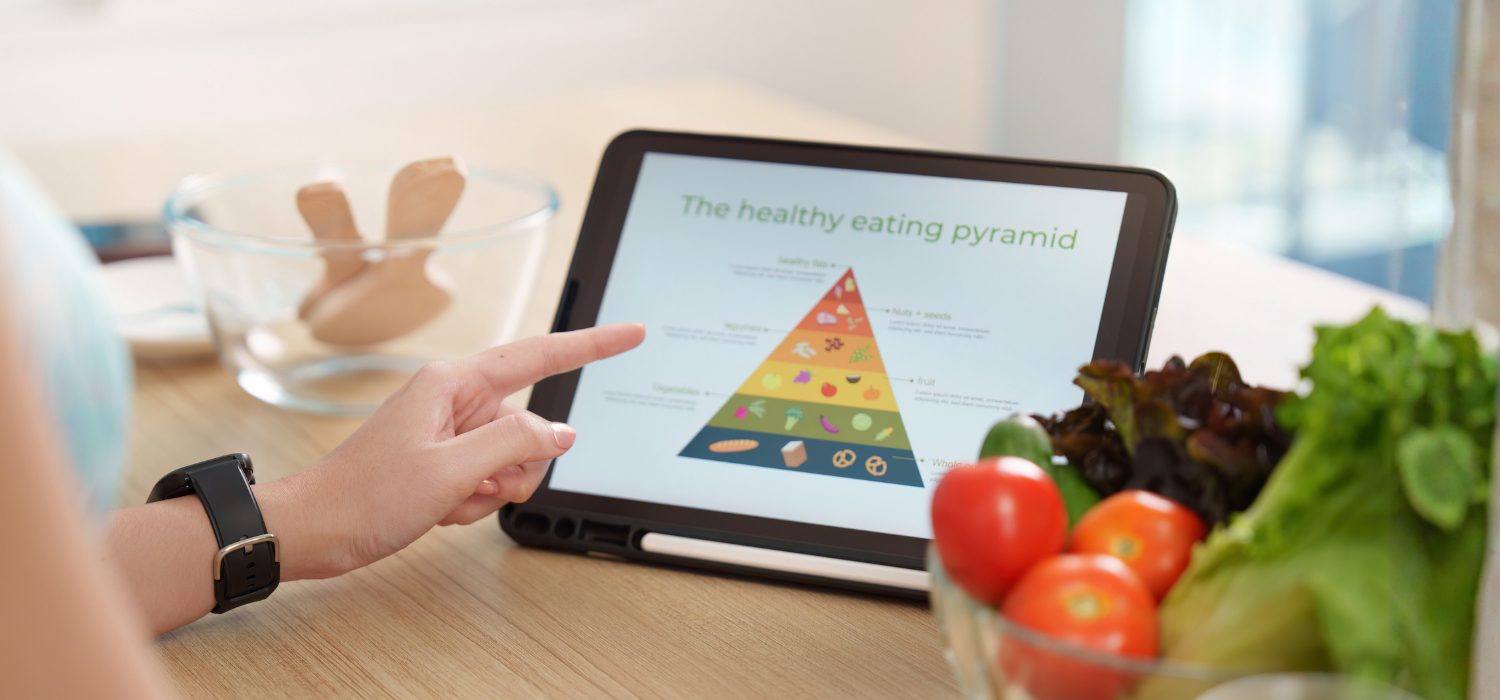
This week, we’re unpacking the newly released US government nutrition guidance. Well, the things we like about it, at least.
Disclaimer, we don’t think the food pyramid 2025 guidelines are perfect. Far from it – from definitions to quantification there’s lots more we’d like to see from the new recommendations set down by US Secretary of Health and Human Services, RFK Jr.
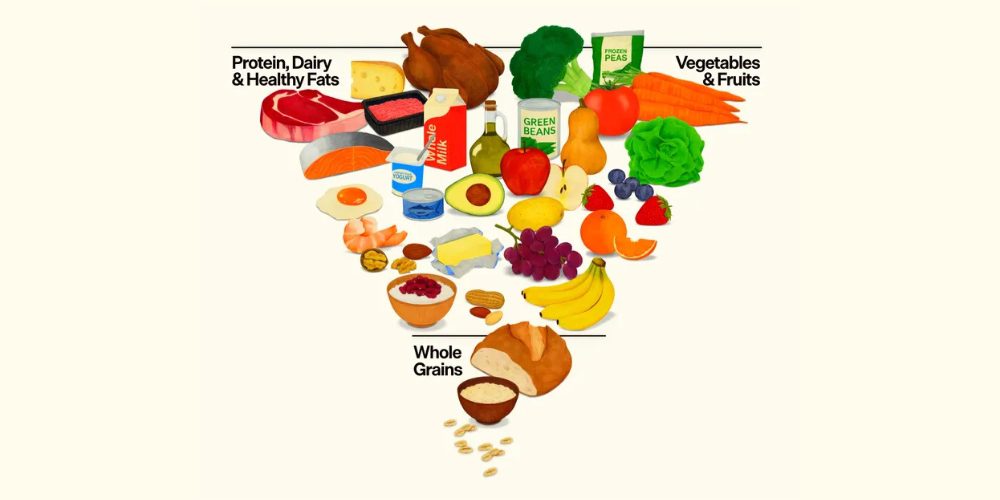
After all, you can’t put a bottle of olive oil next to a carton of milk in the middle of a pyramid, and expect everyone to just ‘get it’. Balanced eating is, we know, far more nuanced than that. Olive oil, yes – we love to see it – but how much? As much as the milk? You wouldn’t know, from the new food pyramid. There’s a nice sense of ‘abundance’, but you can’t have everything in the sort of volumes the new food pyramid seems to suggest.
At TRB, our mantra has always been straightforward: prioritize real, whole foods. This comes from founder Eloise’s roots – we began with a fertility focus, and have evolved into whole body health. Eating for nourishment and nutrient density couldn’t apply more, when talking fertility, pregnancy, parenting and menopause.
We welcome the real food focus
Seeing ‘eat real food’ up there in leading lights is massive, for whole body health. What the new food pyramid lacks in clarity, it makes up for in its driving anti-UPF (ultra processed food) messaging.
Really, we care more about the whole, real food emphasis right now, than we do about the granular detail. Hopefully, that’s all to come.
Here’s what we do like about the food pyramid 2025 (the 2025-2030 Dietary Guidelines), and how it might start fitting in with our daily routines and choices.
1. The fact that a reset happened at all
One of the biggest positives is that guidance is reviewed and updated – even if it’s infrequent. The modern approach reflects decades of emerging research on metabolic health, ultra-processed foods and chronic disease.
We really recommend functional medicine dietician, author and speaker Ali Miller RD’s Naturally Nourished podcast episode 478 for a succinct unpack of the new food pyramid guidelines – the good and the lacking. Co-hosts Ali and Becki Yoo (both MS, RD, LD) touch on the point that dietary guidelines must move with the science, particularly around insulin resistance, inflammation and nutrient density.
For families navigating pregnancy, parenting and long-term wellbeing, knowing that experts are willing to reassess old assumptions is reassuring. Nutrition should not be static.
2. The overriding “eat real food” message
If there’s one theme cutting through the noise of the food pyramid 2025 debate, it’s this: eat real food.
The emphasis has shifted back to whole, recognizable ingredients:
- Real food protein
- Dairy (or nutrient-equivalent alternatives)
- Vegetables and fruits
- Healthy fats
- Whole grains
Less “heart-healthy breakfast cereal”, more “what did your grandmother recognize as food?”
For busy people, this simplifies things. It’s not about perfection. It’s about building meals around nutrient-dense foundations most of the time.
3. A dramatic reduction in ultra-processed foods
A clear shift in the new diet pyramid conversation is the call to drastically reduce highly processed foods.
Unlike older models that gave processed grains pride of place, the new framework explicitly highlights the risks of diets dominated by packaged snacks, sugary drinks and industrially produced convenience foods.
There’s even a public naming of the Standard American Diet (SAD) in the new guidelines, which is good to see. It acknowledges what many health professionals have observed for years: our food environment, not just individual willpower, drives disease trends.
For pregnancy and early childhood, this matters enormously. Nutrient density in those first 1,000 days can influence lifelong health trajectories.
4. Chronic disease isn’t just ‘genetic destiny’
The updated pyramid acknowledges that chronic illness isn’t automatically written into your DNA.
Yes, genetics play a very important role. But proactive, upstream health choices – nutrient-dense eating, stable blood sugar, movement, sleep – can dramatically influence outcomes.
Prevention before prescription.
For parents, this reframes food choices – how we feed our kids is a long-term investment. It’s not just me being ‘that mom’, anymore – I choose to swerve the food dye because I know it’s better for my child’s long-term wellbeing, and I feel equipped to explain that to them.
5. Nutrient density
Older pyramid thinking often became shorthand for “watch your calories”. The newer focus is different: prioritize nutrient density.
That means asking:
- Does this meal deliver meaningful protein?
- Are there micronutrients here – think folate, iron, choline, omega-3s?
- Is this supporting growth, hormones and brain development?
This is particularly relevant in pregnancy, postpartum recovery and growing children.
Is the food pyramid still valid?
In one way, ‘healthy eating’ should be simple. And in that sense, a strongly visual food pyramid and accompanying guidelines can be very helpful. But we know that health is actually a highly individual state, and in reality, very few of us will fit into a neatly-designed pyramid, in terms of what we need, and what we don’t.
Whether you prefer a pyramid, a plate like the MyPlate model, or a whole-food framework, these are the core principles we love to see:
- Real food first
- Protein forward
- Fiber from plants
- Healthy fats are not the enemy
- Ultra-processed foods should be minimal
It’s less about a perfect triangle and more about metabolic health, nutrient density and prevention-focused living.
Up next: Watch me shop the new food pyramid for my family of four, this week and read my early breastfeeding journey, in food & supplements.