

Our 7 fave kids roll on sunscreens this summer (& yes, adults can use them too)


There are literally hundreds of kids’ sunscreens to pick from. The problem is, as (if you’re like me, mildly frantic) parents we’re often buying them last-minute at the airport, maybe even abroad, or in bulk during a winter sale.
For ease, I prefer a roll on, or a stick. Here’s my roll on sunscreen for kids top 7, for spring and summer 2026.
THE INNOVATOR: Solar Buddies Sun Cream Applicator, £7.98
Not the all-in-one, but the product which changes the game for roll on sunscreen, you might recognise Solar Buddies from their successful Dragon’s Den pitch earlier this year.
Founded and perfected by mums – and close friends – Kelli Aspland and Laura Waters, the Solar Buddies Sun Cream Applicator is designed for your kids to use, independently. The award-winning device combines a sponge and roller ball for effortless application. It’s refillable – so you just pop your favourite sunscreen inside, ready-to-roll – and designed for easy use, supporting kids with dexterity or sensory challenges.

With no messy hands – and available in pink or blue – it’s perfect for kids in school, promoting the importance of skincare, sun protection, and the habit of reapplying sunscreen. I’ve grabbed my kids one each, ready for the summer. Just brilliant.
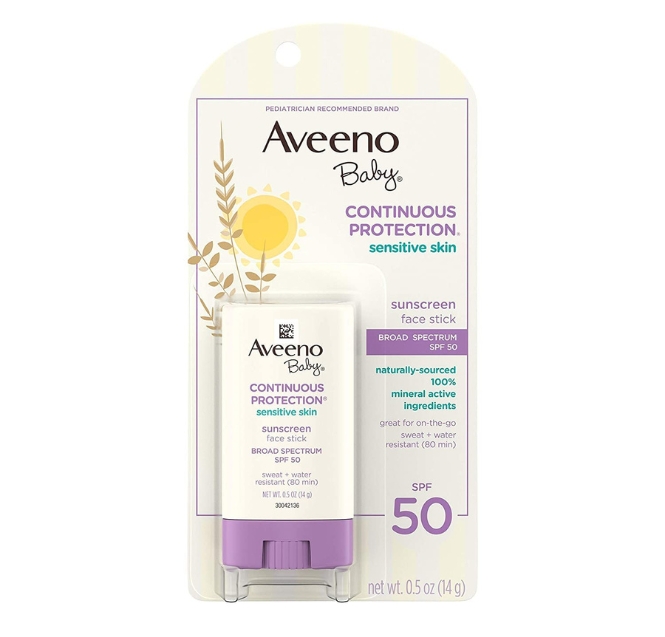
THE ECZEMA FAVOURITE: Aveeno Baby Continuous Protection SPF 50 Stick, £19.50
The National Eczema Association lists this super-gentle option from Aveeno on its child-friendly sunscreen product directory, giving it their trademark Seal of Acceptance™. It’s also a big favourite on Amazon – parents pick up on how easy it is to apply.
Available as a cream too (you could add it into one of the Solar Buddies applicators above, if you like), this sensitive skin mineral baby sunscreen offers broad spectrum SPF 50 protection for your child.
Visit Amazon.UK
Special mention also goes to SunSense Kids SPF50 Roll-On, recommended by The Allergy Mums Club as a dermatologist fave. It gets great reviews from parents year-on -year, with special mention on Amazon ratings for kids with particularly sensitive skin.
THE BOOTS PICK: NIVEA SUN® Kids Caring Roll-On 50+, £5.50
If you’re airport or high street shopping, you’ll be hard-pushed to do better than NIVEA SUN® Kids Caring Roll-On 50+. It was top-rated by Boots customers in 2025 – note, their best-seller is my budget option pick below – and packs a punch for effective protection.
Parents love and trust the extra water-resistant formula, which has been designed to absorb quickly, providing long-lasting moisture and supporting the skin’s protective barrier, reducing the risk of sun allergies.

THE AMAZON BEST-SELLER: Childs Farm 50+ SPF Roll-On Sun Lotion, £7
This is the number one on Amazon right now, for kids roll on sunscreen – and, actually, gets a special mention on pretty-much every other list and awards you’ll find across the parenting sphere.
It ticks the boxes for affordability with effective sun protection, is super-easy to apply and fragrance-free, suitable for sensitive skin and kids who may be prone to eczema. It’s water-resistant, too, but super-gentle.
Visit Amazon.UK

BEST FOR GREEN & NATURAL: Oh-Lief SPF30 Natural Sunscreen Face Stick – Baby & Kids, £14.95
With an ingredients list that gives serious summer glow vibes – think beeswax, coconut oil, pomegranate and carrot extracts – plus sound protection from non-nano zinc oxide, this stick formula is gorgeous to use on the body, not just the face.
The non-nano zinc oxide sits on the skin without sinking in, meaning your little one gets the physical barrier, without absorbing the absorption into the bloodstream. The ingredients are bioavailable, too.

BEST FOR BUDGETING: Soltan Kids Protect & Moisturise Suncare Roll On SPF50+, £4
The 2024 Boots best-seller (read back up for their best-rated listing) is the roll on option from Soltan – and at £4 a pop for effective, super-gentle sun protection, I really can’t argue with that.
Partnered with Macmillan Cancer Support as their Official Sun Safety Partner, Soltan provide an accessible option – pick one of these up online or at almost any Boots store this summer – but one which meets summer skincare needs, head-on.

MY OVERALL GO-TO(s)
So, (from my research) just what is the best sunscreen for kids option in 2026?
For an easy-win – always welcome when you’re running around after two small kids – my go-to roll on sunscreen for kids is the Childs Farm 50+ SPF. I can easily get it online in my Amazon order, or from almost any Boots store, and I know it does the job, gently but effectively. I also like the £7 price point.
But I’m excited to use our Solar Buddies Applicators too, this summer, and try a few different formulas in each with my kids. They both have very different skin types and needs (one has a little eczema, the other is a total water baby), so I love the idea of catering to everybody, with minimal fuss.
Read next: Summer vaginal health tips – 5 ways to keep your intimate health in check on vacation