IVF with donor eggs over age 40 – the prep tool kit to pin


Can I still get pregnant at 48 with IVF? Does age matter in fertility treatment once I’m using donor eggs? Is it worth trying again – or for the first time – over age 45?
These (excellent) questions fly in all the time at The Ribbon Box. And we wanted to get the clearest, most helpful answers – without glossing over the emotional reality of this process. If you’re over age 40 (like one-third of team TRB), we know – you’re not messing around.
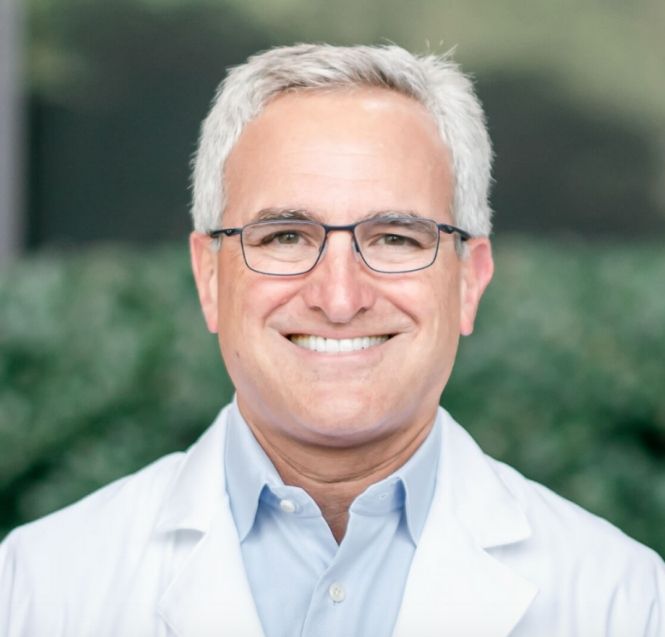
So, in partnership with The Prelude Network®, the largest and fastest-growing network of fertility clinics in North America, we sat down with Dr. Daniel Shapiro, Reproductive Endocrinologist at Reproductive Biology Associates (RBA) in Atlanta, Georgia.
Dr. Shapiro has supported so many families through fertility treatment using donor eggs. In this interview, he breaks down the facts, steps, and success rates for IVF with donor eggs after age 40, right up to age 48 and looking beyond.
This is your toolkit: unfiltered, practical, and full of insight – especially if you’re exploring IVF in your 40s, in perimenopause, or after other options haven’t worked.
IVF with donor eggs after 40: what to expect
“Achieving pregnancy with donor eggs is a multi-step process designed to maximize the safety and success of the procedure. These steps apply regardless of the age of the recipient.”
— Dr. Daniel Shapiro, RBA Atlanta
Here’s what the process typically involves for patients over 40:
- Donor screening:
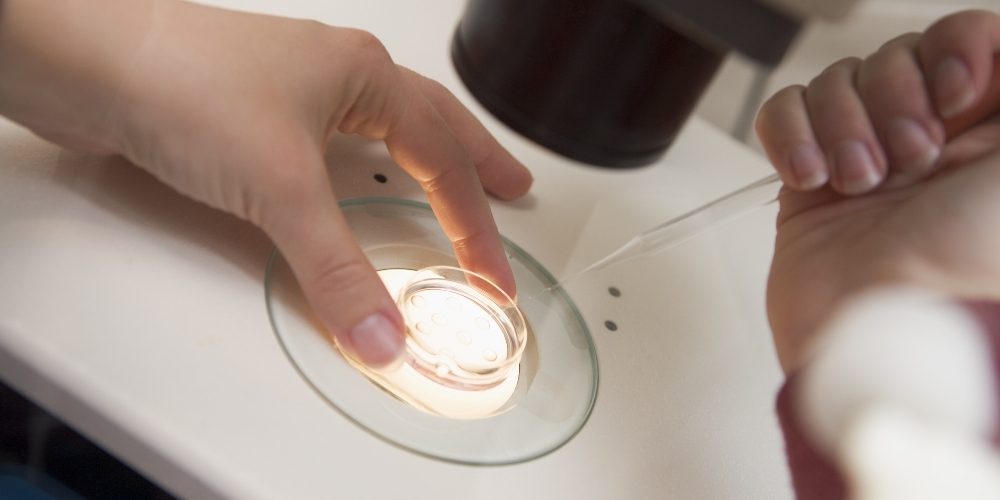
Across The Prelude Network®, donor candidates apply through online questionnaires. Those who meet the American Society for Reproductive Medicine (ASRM) guidelines are screened for ovarian reserve, infectious diseases, carrier status for genetic conditions, and undergo psychological evaluations. - Stimulation and egg retrieval:
Once approved, the donor takes injectable fertility medication for around two weeks. During this time, they’re closely monitored until egg sacs (follicles) are mature. Then comes a “trigger shot,” followed 36 hours later by egg retrieval under light anesthesia. - Donor risks:
Risks include OHSS (Ovarian Hyperstimulation Syndrome), surgical risks like minor bleeding and infection, and potential emotional impacts, all now very well understood and managed by experienced clinics. - Egg handling:
The retrieved eggs can be frozen for later use or fertilized immediately with the intended parent’s (IP’s) sperm. - Recipient screening:
Whoever is due to carry the pregnancy will have imaging to assess her uterus. And if you’re in a heterosexual couple, the intended father is also screened for genetic compatibility. Both partners complete infectious disease testing and psychological counseling.
Recipients in their late 40s or early 50s may need to undergo additional health screening, to minimize the health risks of a pregnancy at this age. - Choosing your donor:
Once the work-up is complete, it’s time to choose your donor – usually through an egg bank or agency. - Fertilization and transfer:
Frozen egg donor: The eggs are thawed and inseminated with sperm.
Fresh egg donor: Timing is coordinated so the sperm is ready on retrieval day. Some clinics may genetically test the embryos before freezing, others don’t. - Uterine preparation:
Hormonal medication begins, as part of preparing the recipient’s uterus. Around three weeks later, an embryo transfer takes place. Hormones continue for 10 days, then a pregnancy test is done. If negative, medication stops and menstruation begins. If positive, hormones continue through the first trimester.
Learn more: Your IVF beta HCG levels explained
IVF age limits in the US – is 48 too late?
“There’s no official age limit to receive an embryo – but the consensus is no later than age 55 and most clinics have a cut-off at age 51.”
Clinics vary, but most set a soft limit around age 51, particularly when donor eggs are being used.
Using your own eggs becomes significantly less likely to succeed after age 43, and by age 44 and above, the pregnancy rate using your own eggs is very low.
Dr. Shapiro notes, “Many clinics will allow attempts with your own eggs up to menopause or age 51, but the chance of success is infinitesimally small.”
Success rates with donor eggs in your 40s – up to age 48
“Irrespective of age, a recipient of a donor egg-derived embryo has between a 50-60% chance of pregnancy every time a single embryo is replaced.”
So, IVF with donor eggs over age 40 can potentially make a significant difference – especially when compared with traditional IVF cycles using one’s own eggs at this age and stage.
Can you get pregnant with donor eggs during perimenopause?
“Yes – patients just need hormonal replacement to support an early pregnancy.”
This is one of the most asked questions on forums and fertility sites. If you’re in perimenopause, or fully menopausal, you can still pursue IVF with donor eggs – your age won’t impact success, as long as your general health is considered.
Plus, your clinic will walk you through a specific plan for early pregnancy.
How many rounds of IVF are normal with donor eggs?
“In general, 60% of all women will have a delivery within one try, 80% within two tries and about 90% within three tries.”
A ‘try’ is defined as an embryo transfer. Dr. Shapiro emphasizes thinking in terms of cumulative success.
A single frozen egg cycle typically yields 2-3 good embryos – that’s 2-3 transfer attempts. Fresh donor cycles usually result in more eggs, offering more chances from one cycle. You’ll need to weigh up the benefits of fresh vs frozen however, with your team.
Preparing for IVF in our 40s – what can we do at home?
“Eat right, get plenty of sleep, exercise at least 30 minutes 3-4 times weekly and hydrate(!)”
Simple, but essential. Dr. Shapiro encourages everyone – at any age – to work toward ideal body weight and overall wellness before pregnancy. It’s the best preparation you can do.
Does your age still matter with donor eggs?
“No. When using donor eggs, your age doesn’t affect the success rate.”
It’s one of the most reassuring insights for anyone considering IVF over 40, whether you’re 45, 48 or approaching 50.
Are treatment protocols different at 48 vs 40?
There are some minor distinctions, mostly around ovulation suppression. Dr. Shapiro dives us a bit deeper on this:
“Premenopausal recipients will, on occasion, need medication to prevent them from ovulating, while post-menopausal recipients will never need those medications. Otherwise, the recipient’s hormonal protocols are identical.”
For women using their own eggs over 40, much higher doses are usually needed, and success rates drop significantly – especially past age 44.
When is the right time to consider donor eggs?
“There is never a perfect time to accept the limits of one’s own eggs … for some this happens quickly, for others it evolves over time, and for some it never happens.”
There’s no easy answer – emotionally or practically. But donor eggs can offer a beautiful path to parenthood when other options haven’t worked, or when age becomes a significant factor.
Final thoughts from Dr. Shapiro
“A parent is someone who loves and nurtures a child, and that person need not have supplied the DNA.”
This resonates deeply. And it’s a sentiment we hear echoed across every IVF and donor conception community. What defines a parent isn’t genetics – it’s love, support, presence, and care.
Start here
If you’re exploring IVF with donor eggs over age 40, speak to a clinic you trust. You can:
- Connect with The Prelude Network® – find your nearest clinic
- Explore more on IVF over 40 in our video series
- Let us know what questions you’d like answered next – we’re always on!
In partnership with The Prelude Network® – the largest and fastest-growing network of fertility clinics in the US and Canada.