


The state of LGBTQ+ family planning and fertility care, right now
In 2025, the road to parenthood for LGBTQ+ patients can involve multiple treatment steps, legal considerations, and complex emotional decisions.
This is not lost on The Prelude Network®, the largest and fastest-growing network of fertility clinics in the US and Canada. Their focus on fertility education for all, combined with their inclusive approach to family-building, means that all patients receive personalized, affirming care at every stage of the process.
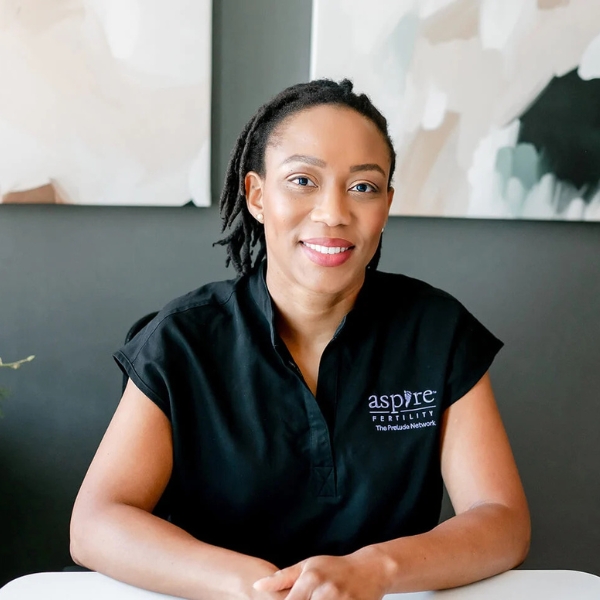
One of the biggest barriers is cost. As Dr. Deborah Ikhena-Abel, a reproductive endocrinologist at Aspire Fertility Austin (part of The Prelude Network®), explains:
“The costs can add up quickly because even when fertility coverage is available, it may not cover fertility treatment in the LGBTQIA context. However, even with coverage, costs associated with third-party reproduction, like donor eggs, donor sperm, and/or surrogacy, can add up very quickly.”
Logistics and finances are just one piece of the puzzle, though.
Grief, identity challenges, dysphoria, or even stress around treatment in traditionally heteronormative settings may also come up for you, and are still arguably elements of the journey that are misunderstood or underrepresented.
So, in partnership with the team at The Prelude Network®, we’ve created a supportive mental health guide to help you navigate.
It isn’t exhaustive, but it offers a starting point for understanding common considerations in fertility treatment and practical ways to support your mental health along the way.

Your path to parenthood – what to expect, and how to prep
Cisgender lesbian couples
For many cis lesbian couples, the decision to build a family may begin with a conversation around:
- Whose egg to use
- What treatment route to take (IUI or IVF)
- How to approach donor sperm selection
Dr. Ikhena-Abel recommends starting with a thorough fertility evaluation for both partners:
“If both partners are reproductive age and/or interested in using their eggs, I recommend they both get a complete fertility evaluation. The results may influence treatment planning, and how they choose to move forward.”
Another early step is genetic carrier screening – this can help you find a sperm donor who’s compatible with both partners’ genetic profiles.
Cisgender gay couples
For cis gay male couples, treatment will often involve:
- An egg donor
- A gestational carrier
Some couples may face grief or uncertainty around not being able to carry the pregnancy themselves, or around which partner will share a genetic connection.
Dr. Ikhena-Abel says:
“They can decide if they both want to have a genetic link or not. In many cases, couples can opt for a split – for example, half the eggs with each partner’s sperm – or they may complete one cycle with one partner’s sperm and return later with the other.”
These decisions are super personal and may bring up certain emotional barriers and complex emotions. It can help to approach them slowly, together, with counseling support.
Trans and nonbinary parents-to-be
Transgender and nonbinary individuals may face different emotions and challenges – especially if medical transition intersects with family planning and fertility treatment.
Dr. Ikhena-Abel encourages early, open conversations with a fertility specialist:
“I would advise trans patients to have a frank conversation with a fertility specialist about their options for fertility preservation – for example, egg freezing or sperm freezing – early in the process.”
Fertility preservation can feel empowering, but it may also bring up gender dysphoria, or conflict with your sense of self.
Having an affirming provider who listens without judgment can make all the difference here.
Vetting your clinic and stepping into fertility spaces
Fertility clinics can still feel built around straight couples. Forms might assume a certain family structure. Conversations may include assumptions. And you might find yourself explaining your family story more than once.
Here are some key tips for approaching those first consultations:
- Ask to speak with staff who specialize or are trained in inclusive/LGBTQIA+ care
- Bring a support person, if it helps
- Protect your peace
Because, most importantly, if a clinic doesn’t feel affirming or like it’s the right fit, it’s okay to walk away. You deserve to be seen and respected for you and your journey, and not be treated like an exception.
Processing grief and questions of identity
Not all parts of the journey will feel joyful. Sometimes, there’s loss – whether that’s of a genetic link, of a gestational experience, or of the idea of how you thought things might happen. In those moments, finding the right kind of mental health support matters.
Dr. Ikhena-Abel stresses that therapists and counselors, especially those trained in reproductive psychology or who work with donor-conceived families, are best placed to guide you through these conversations.
Also, speaking with someone early on in the process can help you explore questions around identity, roles, and what you want your path to look like, before decisions are made. This could also help you feel more prepared for feelings that might come up later down the line.

Handling the (inevitable) questions
Outside of appointments and treatment, sometimes people will ask things about your family-building journey that just aren’t it, even if they seem well-meaning.
These moments can be painful or triggering, and having a few ready responses can help:
- “We’re both moms/dads/parents, just in different ways.”
- “We’ve shared what we’re comfortable sharing – thanks for understanding.”
- “That’s a personal part of our story, and we’re keeping it private.”
You don’t owe anyone your story. Use your voice how and when you choose.
Finding community
Connecting with others who truly get it can help you feel validated and stay grounded throughout treatment.
Look for LGBTQ+-inclusive fertility support groups – some clinics offer them directly, or you might find local or virtual options through LGBTQ+ family organisations:
- RESOLVE: Provides a “Find a Support Group” feature on their website.
- LGBTQ Special Interest Group (LGBTQSIG) of the American Society for Reproductive Medicine (ASRM): ASRM’s group fostering inclusivity for all potential parents.
- Family Equality: Works to advance legal and lived equality for LGBTQ+ families, providing support, resources, and advocacy.
Facebook groups, Reddit threads, and Instagram communities (hop over to the TRB account here – our DMs are always open) can also offer solidarity and real talk when you need it most.
The bottom line?
Fertility treatment can be a lot. You may be juggling medical appointments, decisions, money, and emotions – all while showing up for work, friends, or your relationship.
The key word here? Support. Dr. Ikhena-Abel’s takeaways are to:
- Identify and lean into your support system
- Attend both individual and couples therapy or counseling, if possible
- Engaging in stress-relieving activities like yoga, mindfulness, or acupuncture
LGBTQ+ patients deserve fertility care that’s medically excellent and emotionally supportive. From counseling to donor selection and beyond, clinics in The Prelude Network® are working to make your experience more affirming, informed, and inclusive.
Want to start, or re-start your family-building journey? Learn more about The Prelude Network® and their services and find a clinic near you here.
Want to hear more from The Prelude Network®? Read this next: The IVF with donor egg process: a step-by-step guide (plus, info for age 45+)