











































Accessible, inclusive, & supportive – surrogacy Q&A with the agency doing things differently


The inclusive surrogacy agency to know
Alcea Surrogacy is a decidedly different surrogacy agency that has chartered a way to offer truly equal opportunities for everyone who wants to create families via surrogacy.
We recently sat down live with the wonderful Angela Richardson-Mook, CEO & Founder, to chat through what makes their approach stand out.
Watch as we cover:
- How the Alcea team’s personal experience has helped shape their accessible approach
- Why Alcea doesn’t accept all intended parents
- The support they offer to surrogates and intended parents alike, throughout the journey
- How they plan to continue to reshape the world of surrogacy, in 2025
- And much more
Want to learn more? Whether you are an intended parent looking for full-service surrogacy agency support, want to start with a simple consultation, or are interested in a tailored approach that’s inclusive of all your needs, connect with Alcea – they can help.
Transcript
Eloise Edington
Hello, good evening, good afternoon to those joining from around the world. I am speaking with Angela Richardson-Mook, who is the CEO and founder of Alcea Surrogacy, and we are going to be talking today all about the accessible, inclusive, and supportive ways in which people can pursue their surrogacy journey.
So let me just see whether she’s here, and then we can go live—all about accessibility and inclusivity when it comes to surrogacy, with the agency who do things differently.
Just going to try and connect Angela again—hopefully tech will be on our side.
Welcome, nice to see those who are joining.
Hello Angela!
Angela Richardson-Mook
Hello, good to see you.
Eloise Edington
You too. And you obviously recently came to visit us in London—I’m coming to see you in New York next week. V
ery excited to speak to you today, all around accessibility, inclusivity, and the support that you guys offer at Alcea Surrogacy.
We’ve got some great questions, so please start by introducing yourself.
Angela Richardson-Mook
I am Angela Richardson Mook, and I am a six-time surrogate, two-time donor, and mother via IVF. I founded Alcea Surrogacy, and I currently act as the company CEO.
Eloise Edington
When you were over in London, it was absolutely fascinating recording a podcast with you, hearing all about your personal journey and what led you to found Alcea Surrogacy, and misconceptions that come with being a surrogate—how you can change someone’s life.
Just so many things that I had never really known from not having explored surrogacy or been a surrogate myself. So, yeah—excited to hear more.
Could you explain to us Alcea Surrogacy’s model and who it is for?
Angela Richardson-Mook
Yeah, absolutely. So when my team and I really began to business plan and think about offering a decidedly different experience for intended parents and surrogates both, one of the things that all of our collective knowledge really brought to light was the number of people that felt like the barrier to entry at an agency was so very high for intended parents.
A lot of agencies make distinctions around number of embryos, tested embryos—most require a pretty hefty upfront fee to sit on a waiting list for a very elongated amount of time.
If you think about the average client that is seeking out surrogacy, it’s someone that has been both emotionally taxed as well as financially strapped to pursue a family.
Whether you’re a queer person who knew you were always going to need to use a surrogate, or someone that came to using a surrogate by years of infertility, people are ready to get their family started.
At the time when Alcea was very first coming into the industry, there were actually very few agencies that offered an agency waiting list that didn’t require a deposit and didn’t require many, many, many months of waiting.
As I began to really dig in and look at how we could offer the most ethical and transparent experience for everyone—I knew what it was like to be a surrogate, right? Between myself and my partner in the business, we’ve been a surrogate 10 times. We’ve been pregnant collectively 17 times. So we know what surrogates need. Our team is built from former surrogates.
But I really wanted to lean into that intended parent experience and understand how we can make an already yucky process not as yucky for them.
Our model really is there for people that are ready to get their family started. We’ve kept our barrier to entry low, insofar as—we’re going to have you come into our pipeline, and we’re going to focus incredibly intrinsically on matching criteria. What are you looking for in your surrogate? And then we’re going to match you in a relatively short amount of time—around 90 days or less.
It’s a model that prioritizes the intended parent experience. We really accomplish that by simply limiting the number of intended parents that we work with, versus another agency’s strategy of taking anyone and everyone who will sign on that dotted line, who will pay that deposit.
For us, we want to earn our intended parents’ business, right? If you’ve given me money and you’re sitting on a list, we’ve already made that transaction happen. We’re going to find you a surrogate.
In our model, we are forced to deliver the best and brightest—the person that you were really wanting and seeing yourself partnering with. Because until we’ve done that, we haven’t collected money, we haven’t signed a contract. So at that point, we really have to ensure that the intended parents are being valued and listened to.
And as a result, the surrogate gets someone that they match with so cohesively, because we’re doing that in intentional understanding of what you’re looking for on both sides
But what we’re doing is making sure that the intended parent has a lower threshold to really get started on something after this long and laborious road that they’ve been on—to even get to that first discussion with the Alcea Surrogacy team.
Eloise Edington
Which is why it makes it so much more accessible. Because this is for people.
Why would someone not take these first steps to pursue it and find out more and see what this matching process might be like, and get a bit further into that family-building journey to see what options are?
I like the way that you said it’s a difficult, tricky process. I mean, no one wakes up and wants to have IVF or conception through surrogacy. It’s not like a dream, right?
Angela Richardson-Mook
I always tell our intended parents that I know no one really wants to pick up the phone and make that first call. It’s not anyone’s plan necessarily.
But more importantly, it’s really the most intimate thing that you’re ever going to do—outside maybe your partnership, if you are a partnered individual.
You are opening up so much of your heart, mind, and spirit to another person—and frankly, other people.
Pregnancy is already complicated enough. You throw in an IVF doctor, and a surrogate, and a surrogate’s partner and her family, and attorneys, and all of this process.
I believe that we not only owe it to—we are obligated to offer intended parents an experience that makes them feel valued and empowered, and not just like a deposit on a list. I feel like that really discounts the intimacy of this process.
Eloise Edington
One hundred percent. Well, this is a great question: why do you believe the wait times are much longer with other agencies who do charge an upfront fee?
Angela Richardson-Mook
I think that’s a complicated answer. But I think, most generally speaking, if you think about it from a business perspective, it’s a better business model for the person doing business.
So they can take as many intended parents as are interested in their program, they can earn interest off that deposit, and they can really control how they match. It’s a little bit easier for them because they’ve secured that client before they’ve really done any work.
But secondarily, this industry—that was the standard for decades. I delivered my first child as a surrogate all the way back in 2007—showing my age. I worked with three of the largest agencies here in the United States. All of them still have that model today.
So if you think about it, in 20 years, there’s been no evolution.
But this is incredibly expensive, and it’s an exercise in trust. I think that some of the old gold standard ways of doing things—as well as the ones that offer that model—often have really big budgets that might be backed by private equity.
There’s a combination of things that make that messaging feel advantageous to intended parents through the preying on the need for the security of a long-standing agency, for “this is how it’s been done.”
That’s why I’m really proud that Alcea has been a bit of a disruptor. That was really something that—a staggered agency fee where you kind of pay by milestone, no fee to get on the list—those were relatively new concepts six years ago.
Now I see more and more people adopting them because it is the right thing to do by the client.
Eloise Edington
If I was looking into surrogacy, what I would also find attractive if I was looking for surrogacy is the fact that you are making the decisions with Alcea Surrogacy.
You are behind the driver’s seat.
You have been a surrogate yourself, you’ve lived the process many times, so you know what you wanted being a surrogate—and you know what it’s like for the intended parent as well.
Angela Richardson-Mook
Correct. I think we’re really fortunate as well to have several intended parents on our team.
One of the methodologies of Alcea that’s very different than other agencies is the way that we use our journey support team. Most agencies are staffed by previous surrogates—that’s logical and that makes sense. We have a great team of experienced surrogates that support our gestational carriers through the process.
But we actually have a split case management team. Our intended parents have either a former intended parent or someone that’s worked professionally in their career with intended parents—maybe at a legal office or IVF clinic—and they have the ability to lean on a source that understands exactly where they’ve been and what they’ve been through.
I learned very early on that being a surrogate does not give me all of the right perspectives for intended parents. That’s why I leaned in so heavily to this role. I talk to every intended parent that comes through the door, and I have for the last six years—and I’ll continue to do so.
I think it’s important that they also have the ability to have support, just like the surrogate. Then they can come together on collective activities that make sense.
Again, it’s a matter of having a team of people that can collectively support both sides—neutrally, equitably, and transparently.
Eloise Edington
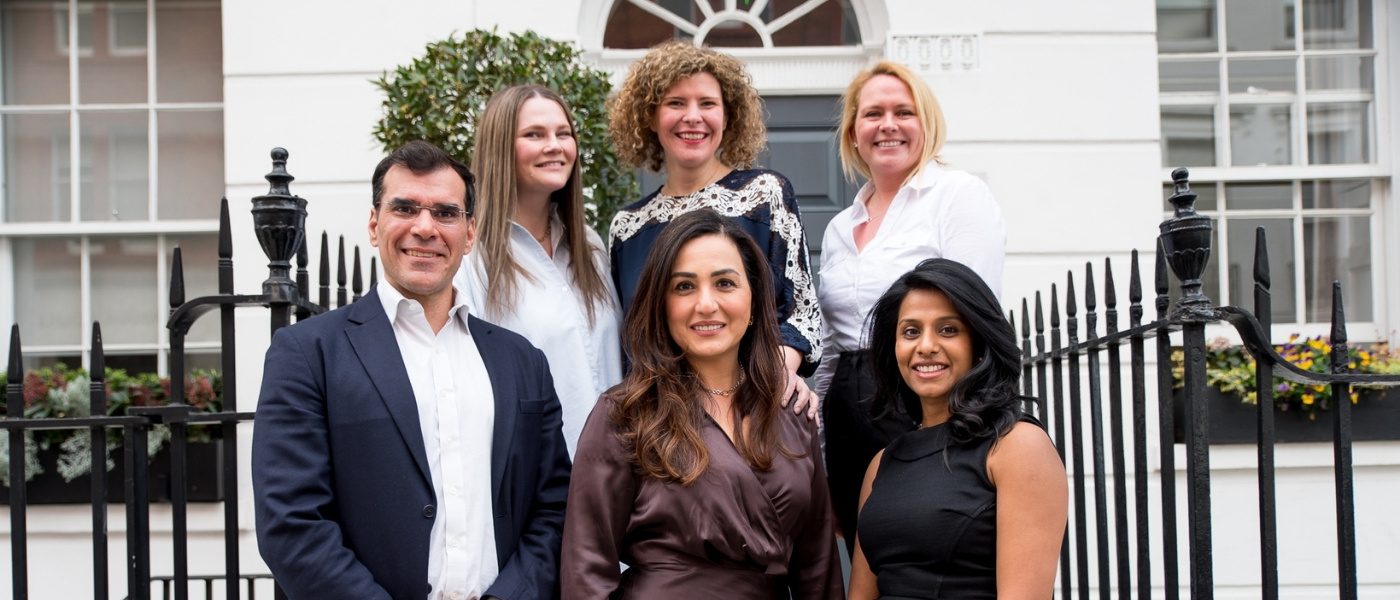
And I’ve met quite a few of your wonderful team. Tell us a little bit more about how these personal experiences have molded Alcea.
Angela Richardson-Mook
I think, especially before social media, surrogates had a relatively limited medium for outlet when it came to discussing concerns or questions.
So we only had the agency that we signed up with passing along and giving us education. Of course, that’s the education that’s going to come from the lens of the way that particular agency does business.
Now that we’ve got this really strong ability to connect—myself and then my very first employee, Chrissy, is someone I’ve known (also a surrogate) many years ago—we really leaned into: What about your agency experience wasn’t the best? What holes could be closed? What gaps could be filled?
Collectively, as we grew, we handpicked person after person that resonated with our ethos, resonated with that message.
I believe good core teams will attract good core talent. I’m really proud of the fact that our team has had longevity.
Every single person on our team has an enormous amount of experience, and we can all offer a really unique perspective to really give an inclusive approach.
Our team is incredibly diverse. We’ve got a lot of different ethnicities on our team, and that’s an intentional approach. Fifty percent of our clients, whether they’re surrogates or intended parents, are not white people. I am a white woman, and I owe all of our clients the perspective that is embodied by them.
Having a diverse team is really important to me in the Alcea mission. I think that is something we’ve done really organically and really well, to offer a curated experience for those that might not always see themselves in some of the other advertising and strategies.
When it comes to finding clients and surrogates, it’s a little bit vanilla, and I like that we have the ability to see outside ourselves and our own identities in that way.
Eloise Edington
Also, what I have noticed from getting to know your team is the empowerment—the approach you take when it comes to looking after the surrogate as well as the intended parent.
Tell us a little bit more about that, having been a surrogate yourself so many times.
Angela Richardson-Mook
Our program initially was built around the surrogate. We have a very robust screening process.
I think that might be a bit overwhelming sometimes when people are applying, because I think we do probably two times the amount of screening that some other agencies do. We do that all before match. I think sometimes that barrier feels a little bit heavy to surrogates, but once we explain to them that it’s really to protect them…
Ultimately, a candidate to be a surrogate has to be a mother, right? They have to be a parent. That’s surrogacy 101—you have to have delivered safely previously. That means you’ve got other people in your life outside of surrogacy counting on you, and we owe it to you to offer you a safe pregnancy experience.
We really do a diligent job on making sure that both mentally and physically, these surrogates that are moving forward in our program are well-equipped to understand how difficult this journey can be, and how sometimes those difficulties might, at times, fall on their shoulders.
Even when it’s not your baby, going through a loss or a termination or transfer after transfer with a lot of medications—that’s hard. It’s hard on someone mentally and physically, and we recognize that.
In addition, the way our program is built is to really kind of equalize the playing field for all surrogates and
What I mean by that is, our surrogates are matching with intended parents that have a vastly different economic background. Some don’t have a ton of limitations economically, but a larger chunk have limitations because, before surrogacy, most of them have already been on a long financial road.
They would love to—they think their surrogate hung the moon—and they would love to do a lot of little nice things for them, but it might just not be in the budget for them.
So in our program, you get the monthly Bump Box, you get the Help at Home care, you get the postpartum focus—all of that is included in the intended parents’ agency fee—as a way to ensure that no matter who you are and who you are matched with, you’re feeling valued and empowered.
You’re getting a little bit extra every month in ways to know that we are so appreciative of you taking this journey to help expand a family.
Yeah, and also postpartum care. We do a really good job. When surrogates are on staff, we make sure that—we know what it’s like to be watched like a tea kettle at the end, right? “When are you going to deliver?” Everyone’s excited. It’s a lot of communication, a lot of activity, and then the baby is born. Rightfully so, the journey concludes for the surrogate, and the intended parents’ journey is really just starting.
They’re just now getting to know their new baby; they’re becoming a family. And sometimes people around you in your life as the surrogate don’t really know exactly how to handle you, because you don’t have a baby—but you’re still recovering mentally and physically.
I think all of our team of surrogates have a really good perspective in being able to help the surrogate see the forest through the trees in those initial moments of emotional time, and really support them from their application through that postpartum period.
We’re not here to match you and then disappear, like we heard a lot of other agencies did in the past.
Eloise Edington
That’s really amazing, because like you just said, the postpartum period is really difficult.
Having just been through it myself again—you know, hormonally, you’re still bleeding, let’s face it, for many weeks—but then, if you don’t have a physical child that’s yours, that you’re parenting at the end of it, it must be difficult to know how to act.
Angela Richardson-Mook
Exactly. People around—you know, no one really understands surrogacy, right? It’s not a topic you can typically talk about with the majority of the population around you.
So in my experience, people just didn’t talk about it, which also felt different to me.
It’s one of those things where I think the complex and very intimate emotions of this process can really be fielded more appropriately by a team of people that have done this before—on both the intended parent and the surrogate side.
I wanted to create a team that could handle all aspects from that journey, end to end, from every perspective, to ensure that everybody could feel supported through the Alcea model.
Eloise Edington
And I presume also for people to understand what to say when people would ask questions?
I presume that you might have people who sort of didn’t know what to say once you’d said, “I’ve just been a surrogate,” and almost just ended the conversation abruptly there.
Angela Richardson-Mook
Yeah, absolutely
Eloise Edington
Struggles, yes.
Angela Richardson-Mook
And I think also intended parents are often very guarded about the personal reasons that they’re seeking out surrogacy.
I think they even struggle a bit to understand how to connect with the surrogate. The amount of gratitude that we get when a baby’s born reminds me on a daily basis of the reasons that we do what we do.
Of course the intended parents are so excited over their baby and family, and some of them have had such tremendous heartache that this is the closure to a long and painful story. But I think what we are often remiss in talking about is the life-changing messages that we get from surrogates.
I’m on this call today, and I live in New York City, and I work in this field because I was a surrogate. It offered me so many outlets in life that I wouldn’t have had access and opportunity to before. That is the exact kind of messaging we get from the surrogate.
“Thank you for allowing me a bit of a buffer in my finances to take the leap to live in a better school district that changed my children’s life.” “I was drowning in student loan debt, and the compensation helped me to pursue my dreams.” “I never thought I was going to be able to buy a home, and now my compensation allowed for that for me and my family.”
This is life-changing. I think because the monetary reasons that surrogacy are often tied to are life-changing in kind of culprit, they’re often dismissed or considered something we don’t talk about. It’s the elephant in the room.
But I believe that’s the complete wrong approach. At the end of the day, surrogacy does involve the transactional attitude of money. You’re never going to escape it—even an altruistic surrogate still has to have her medical bills paid and her food covered.
But at the end of the day, those transactions—what is done—can often change a surrogate’s life in a way that I don’t think intended parents often can even wrap their brain around.
So I think ultimately, Alcea’s mission in offering this equalized and transparent and frankly equitable approach—in being neutral and supportive—allows for everybody to have a better understanding of both sides, and allows us to move forward in the most ethical way possible.
Eloise Edington
Someone just said, “You literally changed my life.”
If you were to give a call to action for other people about accessibility and support for intended parents, what would that be?
Angela Richardson-Mook
I think for me, that answer would be twofold, because I’m actually asked that quite a bit on intended parent consults: “What can I do to be the best intended parent?” or “What is my call to action here?” I think for intended parents, my call to action is always: keep an open mind.
What I mean by that is, sometimes we get really caught up in all of these little details and all of the trauma and all the things that have brought us to surrogacy—and it forces us to kind of keep our decision-making in this very myopic kind of circle—when it comes to picking your surrogate partner, what you’re looking for is someone who’s a good communicator, someone that you can see yourself working with in this journey.
But it doesn’t necessarily mean you’re going to meet your best friend. I think that sometimes we kind of idealize this process, to think that if I don’t walk away with this super strong, friendship-like relationship, something didn’t work. I find that’s absolutely 100% not the case.
I think that a good supportive partner in this—and keeping an open mind about who it is that you can see yourself working with—is not necessarily someone you could see yourself being friends with. Those are two very different conversations.
What kind of communicator are you? How do you solve conflict? Are you a type A or type B person? Think about those things versus what kinds of things you want to go chit-chat about at lunch on Friday. I think sometimes we lose sight of the real mission.
On the surrogate side, the biggest call to action I always have is remembering that surrogacy—that pregnancy—was easy for you, but it wasn’t easy for the person you’re partnering with.
Sometimes remember that in the way you live your life and in the words you say. It might seem very simple to you, but to someone who has lost two babies in the third trimester, or someone who has had an enormous amount of grief and challenge, every single thing you do or say can impact their entire day.
They feel the heaviness of this experience. So remember that it’s easy for you, but it wasn’t easy for them. That’s why you’re an amazing surrogate.
Eloise Edington
That is such a good piece of advice, because also I guess you would probably need to remind surrogates on that piece—that while it might seem like an over-the-top question, it’s probably coming from a place of heartache and fear, and from having experienced loss or whatever it might have been to get to this road.
That’s why emotions must be so heightened.
Angela Richardson-Mook
Every single person that comes to surrogacy, even if they’ve not experienced a pregnancy before, has had to deal with some emotional, extenuating circumstance to get here.
Even a queer person who would much rather not be using IVF and not be using a surrogate—they’re forced into this. That doesn’t mean it didn’t take them a lot of time to process that, to come to terms with giving up and surrendering that control.
In addition, especially queer male couples—they don’t know a lot about pregnancy, often. Especially if they didn’t have sisters or moms or weren’t exposed to that.
They’re really looking for you to be their source of truth in anything and everything pregnancy. That’s a huge responsibility.
And on the flip side of that, people who have experienced pregnancy—maybe they couldn’t get pregnant and they tried and tried, or maybe they could get pregnant but couldn’t stay pregnant—the emotional waiting for the other shoe to drop is real, because that’s all they’ve experienced.
So we have a—I don’t think it’s even a choice—we have a mandate as surrogates to remember that perspective and to remember that we owe it to our intended parents to be the best partner, by acknowledging what brings them to this very difficult situation.
Eloise Edington
We speak to people in our community time and time again who are literally holding their breath through each trimester—every milestone.
They don’t want to have a baby shower or acknowledge anything until the baby is there safely in their arms.
Angela Richardson-Mook
Merera, who is our matchmaker—she’s our match coordinator and a former intended parent—I’ll never forget that she said to me, “Even when I’m driving to the hospital with my surrogate in labor, I didn’t believe I was going to walk out of there with a baby.”
She said, “I could not wrap my brain around it.” That was just so powerful to me.
I remember my last set of intended parents, and I believe that my intended mother was similar—she just couldn’t believe this was actually happening.
I remember when she held her baby for the first time, and her face morphed into a new person.
It was years of stress and hard feelings and anger and frustration and resentment toward everything—because all she wanted was to be a mom—melted away. But up until that moment, she was waiting for that other shoe to drop. That’s powerful.
It’s a big responsibility, and surrogates and intended parents alike have to recognize the duplicity of this role. It’s amazing, but incredibly difficult. Recognizing that, I think, allows us all to come together collectively in a more cohesive way.
Eloise Edington
Oh, it’s so, so emotional, and it’s so amazing to be doing something that does change lives like this.
Do you at Alcea Surrogacy accept all intended parents?
Angela Richardson-Mook
I mean, we accept all prepared intended parents.
This is what I mean by that: I am a firm believer that agencies have a personality.
There are certain attributes about the way that we market ourselves, about our ethos, about our strategy, and intended parents owe it to themselves to interview different agencies to understand their personality. It’s not always the best fit.
Sometimes that’s not just on our side—it’s on the intended parent side. I’ve had intended parents express to us things in pre-match that really don’t align with the type of surrogate that we attract.
We’re not here to waste people’s time and show them profiles of people they couldn’t see themselves working with.
So do we say no? No, I mean—we don’t say no outright. If your clinic is facilitating the IVF process for you to make embryos, then we will accept you into our program holistically.
Then it’s a matter of really digging into the nuance and intentional understanding of what they’re looking for, not only in our support partner but also in their partnership with the surrogate.
There are times when that ethos just doesn’t align, or there’s a mismatch of values—from things like religion and termination, and the kinds of stances we take. Those are very important. I wouldn’t want someone to compromise any of that, and our team certainly isn’t going to compromise that.
So our answer is yes—but that comes with the caveat of making sure that it’s the best fit for everyone.
Because at Alcea, we’re hands-on. You’re going to have to talk to us a lot, and I want that to be a feeling of, “Oh, I’m glad the agency’s calling.” There are already enough things in this journey to cause complications and that feeling in your gut—I don’t want the agency to be part of that.
Eloise Edington
That’s amazing. If anyone has any questions for Angela while she’s speaking, please do ask.
You mentioned inclusivity earlier, which I love. How do you ensure that all communities, regardless of race or background, have equal access to your services?
Angela Richardson-Mook
I think, in a very elementary way, it starts with the way that we have always marketed ourselves.
One of the things that Chrissy and I saw very, very early on was that if you go to surrogacy websites, it’s often always curated white women. And when I say curated, we’re talking slender women that are traditional in aesthetic.
I’m a woman that has tattoos. I’m someone that has my nose pierced. We’ve got a variety of different kinds of aesthetics and looks on our team—and I love that we offer everyone a safe space and home, because you can look at our employees and see that we live our mission.
Our mission is to offer an inclusive approach to this, and so you’re going to see a wide swath of the way we look, the way that we think, and that’s intentional. I think just having that allows us to offer a different experience.
I know about that in my own life, and just as I age, I notice more and more companies that really pay attention to the fact that not all women are 25. That’s a new approach. Back when I was coming of age, you never saw someone outside that mold, and surrogacy is no different than how we live our life every single day. I think just letting people know that we’re here to recognize those things.
In addition, not all intended parents are white either. So when we offer these support structures for surrogates that are a diverse group of people, that means intended parents have a diverse group of people to choose from in their surrogate partner.
There are nuances of culture and ethnicity that we recognize internally and understand, and we speak about them in our pre-match consultations. If they’re important to you, we’re going to find that surrogate. I think those are conversations that some agencies shy away from, and I believe that leaning into them is the better approach.
Our way of combining those resources allows for everyone to be welcome on with the Alcea team.
Eloise Edington
This is exactly why someone on here chose—what drew them to Alcea—so it’s so refreshing to hear. Having met you all, I can see why that is so attractive.
In terms of support for surrogates and intended parents, anything else you want to highlight about the process or the journey from both sides?
Angela Richardson-Mook
Yeah. I mean, as I said before, we have that split case management team, which allows for more bandwidth.
Whereas most agencies have 25 matches—that’s 50 people that someone’s looking after—our team is just 25 intended parents or 25 surrogates, and so you can really have that deep level of focus.
Even more so than that, we’ve got other levels of expertise on our team that are enormously helpful for intended parents. Our social worker is a PhD psychotherapist. She does all of our match meetings.
She’s always there for anything and everything that’s escalated—or sometimes just to have a vent session, a safe space. I think that is really unique and something that is incredibly important to our mission.
Having our clinic coordination team—we know that there are ebbs and flows in this process, and we want the most intricate as well as the most educated support that we can during those times.
When intended parents and carriers are cycling, we’ve got the clinic coordinator to really have their hands involved in that: looking at their appointments, talking to them about their medications, making sure we know who’s paying for monitoring—all of those little things.
When that moves into pre-birth, we’ve got the legal administration team that’s really looking at all of those, providing all of the things to the individual attorneys to make sure things are moving smoothly.
We’ve got little levels of expertise internally to make sure that our neutral approach—by not having in-house legal or in-house escrow—still feels seamless to the client.
Our team is the one coordinating; we’re just not the responsible people, in so far as you’ve got your neutral attorney and your surrogate has their neutral attorney, which we all agree is the ethical approach. But it can sometimes feel a bit disjointed.
I think the way that we’ve built the program allows for us to close that disjointed nature and make it feel seamless to everyone, both surrogate and intended parent.
Eloise Edington
Love that. And in terms of 2025, what are you looking forward to as an agency? What are your plans to continue disrupting, reshaping what’s happening for the world of surrogacy that people should be aware of?
Angela Richardson-Mook
Well, we are continuing this year to expand our international program. In the very beginning, we really wanted to stick to what we knew—and we know domestic surrogacy.
As we’ve learned and begun to partner with new people, we just started to dip our toes into that water this year, and we’ve grown that program quite successfully. We’ll continue to do that next year.
We’ve got a lot of exciting things from the marketing side. We are relaunching our Co-op program, which is a way for anyone and everyone—whether you’ve been in Alcea Surrogacy or not, an Alcea surrogate or not—to get involved in the surrogacy community. We are going to launch a podcast.
We’re also looking to begin to be a little bit more transparent about the things that we’re doing in the community. Alcea does a ton of discount work. We partner with a lot of different charities, and we do that because we know it’s the right thing to do.
We’re going to do a much more robust job of ensuring that those partners and nonprofits that we’re partnering with get the benefit of us being a little bit more public about that, so they can get help from others in our community to continue doing the amazing work that they do.
Eloise Edington
That’s incredible. We can’t wait to see and hear more about it.
Equally, coming to visit us across the pond—spreading that awareness, educating, getting involved with clinics over here as well as in the US and around the world—is instrumental to helping people on a global level, right?
Angela Richardson-Mook
Absolutely. We know that outside the United States—and even in Canada and the UK, where there’s a little bit of expense-compensated surrogacy—as far as ethical compensated surrogacy, the United States is going to continue to be the option for intended parents.
We want to ensure that we’ve ingratiated ourselves into the communities we are serving in the UK and other places, so that they know we have their back. We have a deep and resounded knowledge of their processes and the way that they do things.
There are different attitudes and ways of managing things. It’s our job to meet the client where they are—and not the other way around. We’ll continue to do that into next year.
Eloise Edington
Well, I would urge anyone watching this—live or on replay—whether you’re looking for a full-service surrogacy agency or some support to have that initial conversation, wherever you are, please do head to our link in bio.
We’ve linked up Alcea Surrogacy’s website, and we would urge you to pick up the phone or send an email, get in touch, DM—whatever works best for you.
Angela and the team would love to help you at whatever stage you’re at and have all the answers to your very valid questions ready to go.
Really excited to see what’s to come and to see you all in New York next month. Everyone, keep your eyes peeled for what we’ll be doing together very soon.
Angela Richardson-Mook
All right. Welcoming you to New York City at Christmas—it’s a beautiful time. We’ve got a lot of amazing things. Thank you so much for the time, and I look forward to seeing you.
Eloise Edington
Thanks, everyone, for joining today.
Angela Richardson-Mook
Absolutely. Thanks, everyone. Bye.
Eloise Edington
Bye-bye.
Want to hear more from Angela? Listen to this next: A decidedly different surrogacy experience, with the team at Alcea Surrogacy – Ep 1: Angela’s Story


